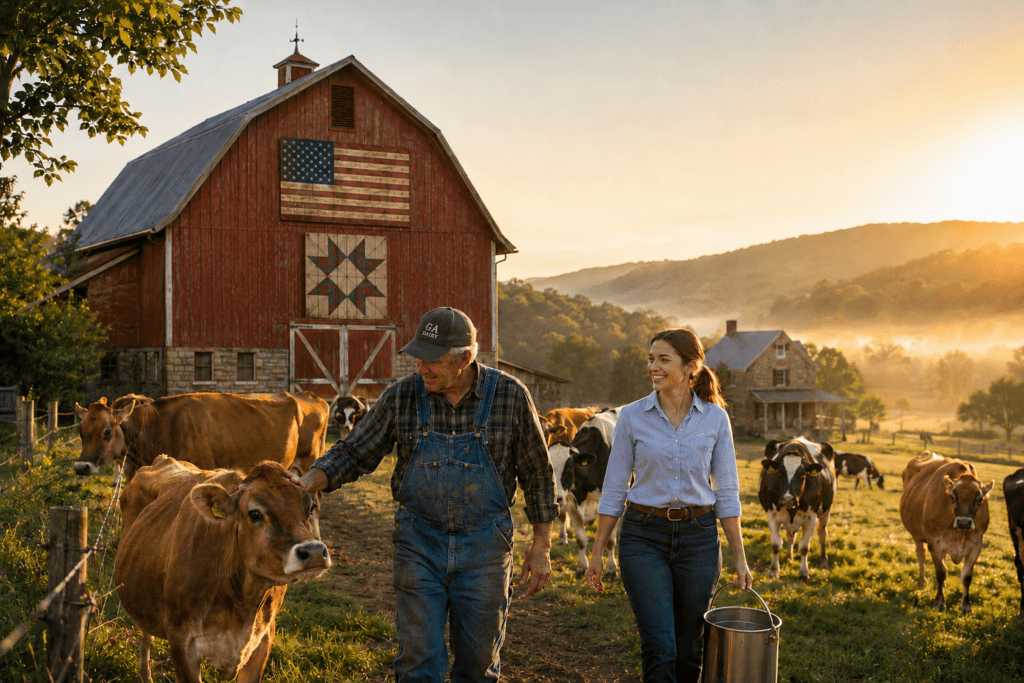
Long before most Americans wake up, someone is already at work caring for the cows that help feed our nation. As America celebrates its 250th anniversary, it is easy to focus on the famous moments that shaped our history, like Independence Hall and the signing of the Declaration of Independence. But there is another American story that is just as important to our heritage: the story of the families who rise before the sun to dedicate themselves to 250 Years of American Dairy Farming.
For generations, families have quietly started their mornings while most of the country was still asleep. Whether it was a small family farm in colonial America or a modern dairy caring for hundreds of cows, the rhythm remains familiar. Farmers feed the animals, milk the cows, care for the land, and provide clean food for the community. Technology has changed, but the dedication defining 250 Years of American Dairy Farming has not.
Here at FindingRawMilk.com, we spend every day helping you reconnect with local farms. That mission becomes especially meaningful as we celebrate America’s 250th anniversary. Supporting local agriculture is not simply about buying food close to home; it is about preserving the legacy of 250 Years of American Dairy Farming.
Before There Were Grocery Stores, There Were Farmers
Long before refrigerated trucks or grocery chains, nearly every American community depended on local farms. Milk did not travel hundreds of miles; it came from a nearby pasture. Families churned butter in farmhouse kitchens, and cheesemakers crafted their products steps away from the milking barn.
Neighbors knew the families producing their food because they lived in the same community. Fresh, unprocessed milk was a daily staple, not a specialty item. That close relationship helped shape American agriculture for generations.
While today’s food system looks different, thousands of family farms continue carrying that tradition forward. They provide fresh milk to families who value knowing exactly where their food comes from, proving that the commitment found in 250 Years of American Dairy Farming is still alive.
Before Sunrise: A Tradition That Never Changed
Imagine standing outside a dairy barn before daylight. The air is cool, the pasture is quiet, and the only sounds are cows stirring as a farmer starts another day. That scene happened in 1776, and it will happen tomorrow morning.
Today’s dairies benefit from innovations that early farmers could never have imagined. Yet the heart of the practice remains unchanged. Healthy cows still require daily care, fields still need careful stewardship, and families still work together. The day still begins before sunrise.
Perhaps that is why 250 Years of American Dairy Farming continues to earn such deep respect. While many professions have changed dramatically, dairy farming still demands the same commitment it always has. Cows do not take holidays, and neither do the people who care for them.
The Families Keeping 250 Years of American Dairy Farming Alive
It is easy to view dairy as something found only in a grocery store refrigerator. But behind every gallon of milk, wheel of cheese, or pat of butter is a team of people who invest countless hours into their lifestyle. Many dairy farms have remained in the same family for generations, passing down values like hard work, stewardship, and resilience from grandparents to children.
Every farm in our directory has its own story. For instance, Churchtown Dairy in New York serves its local community through a dedicated on-farm store, carrying on traditional Northeast agricultural traditions. Down in Texas, family-run operations like Four E Dairy provide fresh milk directly to their local community, proving that heritage values thrive in the modern era. Meanwhile, places like Jewel Hill Farms show how small family farms continue to keep traditional dairy heritage alive for the next generation.
Some farms milk Jersey cows known for rich, creamy milk. Others raise Holsteins, Brown Swiss, Guernseys, Ayrshires, or Milking Shorthorns. They have different approaches, but they share one purpose: producing food with care, mirroring the consistency of 250 Years of American Dairy Farming.
America’s Heritage Dairy Breeds
America’s dairy story would not exist without the remarkable cows that have nourished generations of families. Many of the breeds we know today have deep historical roots that define 250 Years of American Dairy Farming.
- Jersey: Famous for producing rich milk with naturally high butterfat, making them favorites for cream, butter, and artisan cheeses.
- Guernsey: Known for their beautifully golden milk, which contains high levels of naturally occurring beta-carotene.
- Brown Swiss: Earned a reputation for longevity, calm temperaments, and milk that is highly prized by cheesemakers.
- Ayrshire: Hardy, efficient grazers that perform exceptionally well in a variety of climates and rough terrains.
- Holstein: The iconic black-and-white cows that became America’s most recognized breed thanks to their exceptional milk production volumes.
- Milking Shorthorn: Continues a long tradition of versatility, producing quality milk while adapting well to many different styles of farming operations.
Every breed contributes something unique to our agricultural landscape. Together, they tell a larger story: America’s dairy heritage is built on diversity, careful breeding, and generations of dedicated farmers.
More Than Milk
When you think about dairy farming, fluid milk naturally comes to mind first. But for much of American history, family dairy farms produced far more than that. Fresh cream topped desserts, butter was churned for daily cooking, and hard cheeses helped preserve milk long before home refrigeration became common. Cultured foods like buttermilk and yogurt found their place in kitchens centuries ago.
Even today, many local dairies craft traditional products that connect families with old-world methods. For many visitors, a trip to a local dairy farm is about more than purchasing food. It is about watching cows graze on pasture, meeting the people behind the farm, and learning how food is produced.
Those experiences build trust. They remind us that agriculture is not just an industrial sector; it is a relationship between farmers, animals, the land, and the communities they serve.

250 Years of Innovation, One Timeless Commitment
If an American dairy farmer from 1776 could visit a modern dairy today, they would be amazed. Instead of hand-milking a few cows by lantern light, they would see computerized milking parlors, stainless steel bulk tanks, and veterinarians using advanced diagnostics to keep herds healthy. Tractors have replaced horses, refrigerated transportation delivers fresh dairy safely, and generations of research have helped farmers improve animal nutrition.
The tools have changed dramatically, but the purpose has not. Every innovation is built around the same goal: caring for cows and providing nutritious dairy products for families.
| Feature | Then (1776) | Today (2026) |
| Milking Method | Hand milking | Modern milking systems and robotics |
| Storage | Wooden buckets and earthenware | Stainless steel bulk tanks |
| Transport | Horse-drawn wagons | Refrigerated transportation |
| Market Scope | Small community markets | Local, regional, and national networks |
| Cooling | Spring houses | Advanced refrigeration and cooling systems |
| Management | Individual experience | Experience combined with science and data |
While today’s dairy farms look different than they did 250 years ago, one thing remains constant: every morning still begins with people who are deeply committed to caring for their animals. That is something worth celebrating.
Why More Families Are Looking Local Again
Over the last several years, more Americans have started asking questions about where their food comes from. You want to know who raised it, how they produced it, and if you can meet the farmer. Across the country, farmers markets have grown, local food movements have expanded, and more families are taking the time to visit nearby farms to support local agriculture.
For those interested in raw milk, that connection is especially important. Raw milk is not simply another product on a grocery shelf. In states where it is legally available, obtaining raw milk means getting to know a local farmer, understanding your state raw milk laws, and learning how individual farms care for their animals and handle production.
That relationship between farmer and consumer feels remarkably familiar. In many ways, it is a return to something Americans experienced for generations—knowing the exact people who feed your family.
Celebrating the Farmers Behind Every Sunrise
Independence Day is often celebrated with fireworks, parades, backyard cookouts, and time spent with family and friends. Those traditions are worth celebrating. But before the grills are lit, before the first parade begins, and long before the fireworks light up the evening sky, thousands of dairy farmers across America have already been at work for hours.
They have milked cows, fed calves, checked fences, moved cattle to fresh pasture, and cleaned barns. They solve problems that most people will never see. They do not do it because it is convenient; they do it because animals depend on them every single day.
There is something uniquely American about that kind of quiet dedication. It does not ask for recognition. It simply shows up, morning after morning, generation after generation. As America celebrates 250 years of independence, take a moment to recognize the men and women who continue one of our nation’s oldest traditions.
Looking Toward the Next 250 Years
The story of American agriculture is still being written. The next generation of dairy farmers will face new opportunities and new challenges, adopting technologies we can only imagine today. They will continue improving animal care, protecting natural resources, and finding new ways to connect with the communities they serve.
Some will operate large commercial dairies, while others will build small family farms serving their local neighbors. Some will produce artisan cheeses, cultured dairy products, or farm-fresh milk for families seeking a closer connection to agriculture. Together, they will carry forward a tradition that has endured since our nation’s earliest days.
The values that built American farming—hard work, stewardship, resilience, and community—remain just as meaningful today as they were 250 years ago. Every generation adds its own chapter to this history.
Finding the Farms Keeping Tradition Alive
One of the best ways to celebrate America’s agricultural heritage is by experiencing it firsthand. You can visit a local farm, attend an open house, shop at a farmers market, or take your children to meet the animals. Ask questions and learn exactly where your food comes from to support the families who invest their lives into your community.
If you are interested in finding local dairy farms, learning about your state’s raw milk laws, or discovering heritage breeds that have shaped American agriculture, FindingRawMilk.com is built to help you do exactly that. Every farm has a unique story, and every community has farmers worth knowing. Sometimes, the shortest path to understanding America’s history begins with a drive down a country road.
Here’s to the Next Sunrise
For 250 years, America’s dairy farmers have lived by a schedule that is set by sunrise, not by calendars or clocks. Every morning, before most of us pour our first cup of coffee, someone is already walking toward a barn. Someone is checking on a newborn calf, filling feed bunks, and making sure the cows are healthy, comfortable, and cared for.
It is work that rarely makes headlines, and it is not glamorous. It does not stop for weekends or holidays, yet it has quietly helped feed generations of American families.
As we celebrate America’s 250th anniversary, we honor the presidents, soldiers, inventors, and leaders whose names fill our history books. But let us also celebrate the people whose names may never appear in those books—the families who rise before dawn to care for the land. Here is to the farmers who have greeted the sunrise for 250 years, and here is to the next 250.
Why is America’s 250th anniversary being celebrated?
America’s 250th anniversary commemorates the signing of the Declaration of Independence in 1776 and celebrates the nation’s history, people, and traditions leading into 2026.
How did early Americans get their milk?
Before refrigeration and supermarkets, most Americans obtained fresh milk from local dairy farms or family cows. Butter, cheese, and cream were commonly produced directly on or near the farm.
Why do dairy farmers start work before sunrise?
Dairy cows require consistent daily care and milking schedules. Farmers often begin their work before daylight to care for their animals and prepare for the day ahead.
Are family dairy farms still common?
Yes. While dairies range in size and operation, thousands of family-owned dairy farms continue producing milk and dairy products across the United States.
How can I find a local dairy farm?
Directories like FindingRawMilk.com help connect you with local dairy farms while also providing educational resources and state-by-state information about raw milk laws.
Final Call to Action
This Independence Day, consider celebrating America’s agricultural heritage in a simple but meaningful way. Visit a local farm, support a family dairy, and learn where your food comes from. If you are looking for a dairy farm near you or want to better understand the laws surrounding raw milk in your state, explore our nationwide directory at FindingRawMilk.com. We are honored to help connect your family with the local farms that keep one of America’s oldest traditions alive.

Author: Team FRM
The FindingRawMilk Team is dedicated to building the most comprehensive and transparent directory for raw milk enthusiasts. Our mission is to bridge the gap between local farms and consumers by providing verified listings, clear state-by-state legal guides, and educational resources. We believe in the importance of food freedom and strive to make sourcing high-quality, farm-fresh milk as simple as a single search.



Leave a Reply