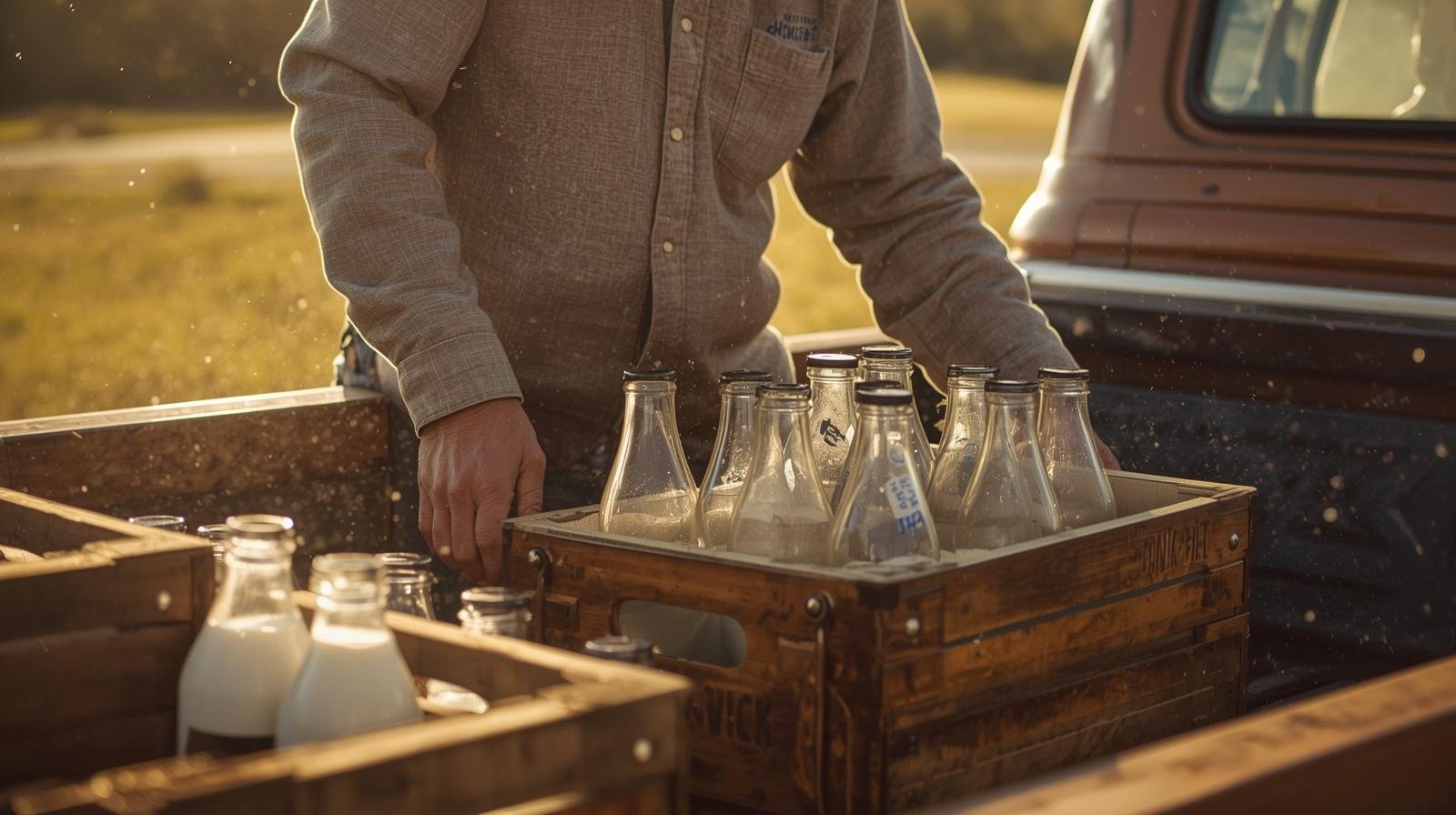
What Is Raw Milk?
If you have ever visited a local dairy farm, you have probably heard the term raw milk. Unlike the milk found in most grocery stores, it comes directly from the dairy without being pasteurized after milking.
For many families, fresh milk is more than simply another beverage. It is a direct connection to local agriculture, small family farms, and traditional food production. Some people enjoy its fresh taste, others appreciate knowing exactly where their food comes from, and many value building relationships with local farmers.
Whether you are new to raw milk or simply looking for a better understanding of how it is produced, this guide will walk you through everything you need to know. We will explain what it is, how it is collected, how it differs from conventional milk, the animals that produce it, and how to find reputable local farms.
If your goal is to purchase raw milk, you will also learn where it can legally be sold and how FindingRawMilk.com can help you connect with producers in your area.
Defining Raw Milk
Raw milk is milk that has not been pasteurized after leaving the animal.
After a healthy dairy animal is milked, the milk is filtered, rapidly cooled, bottled or stored in sanitized containers, and kept refrigerated until it reaches the consumer. Unlike conventional milk, it is not heated during pasteurization.
Raw milk may come from:
- Dairy cows
- Dairy goats
- Dairy sheep
- Water buffalo
- Camels
- Donkeys
In the United States, cow’s milk is the most common type of fresh milk available, followed by goat milk.
Although people often associate raw milk with small family farms, it has been the traditional way milk was consumed for thousands of years. Today, many consumers continue to seek it out because they value buying directly from local producers and knowing more about how their food is raised and handled.
| Feature | Raw Milk | Pasteurized Milk |
| Pasteurized | No | Yes |
| Homogenized | Usually not | Yes |
| Source | Local dairy farms | Commercial processing facilities |
| Common Animals | Cow, Goat, Sheep, Buffalo | Cow |
| Cream Layer | Naturally rises to the top | Mixed throughout |
| Refrigeration | Required | Required |
| Availability | Depends on state law | Widely available |
| Best Place to Buy | Local dairy farms and herdshares | Grocery stores |
What Does “Raw” Actually Mean?
The word raw refers to one thing: the milk has not been pasteurized.
It does not automatically mean:
- Organic
- Grass-fed
- A2
- Non-homogenized
- Certified organic
- Regenerative
- Jersey milk
Those are separate characteristics.
For example, a farm may sell fresh milk from Jersey cows that graze on pasture. Another farm may sell it from Holsteins fed a mixed ration. Both products are still raw milk because neither has been pasteurized.
Understanding this distinction helps avoid confusion when comparing different farms and dairy products.
Raw Milk Has Been Part of Human History for Thousands of Years
Long before refrigeration, grocery stores, or commercial dairy processing existed, milk was consumed directly from dairy animals.
As communities grew, dairy farming became an important part of agriculture around the world. Families often kept cows or goats specifically to provide fresh milk, butter, cream, yogurt, and cheese. According to historical records at the USDA National Agricultural Library, early agricultural practices relied strictly on immediate local consumption and small-scale distribution.
During the late 1800s and early 1900s, cities expanded rapidly. Milk was increasingly transported longer distances without refrigeration, and sanitation standards varied widely. During this period, pasteurization became more common as public health practices evolved and commercial dairy distribution expanded.
Today, both systems continue to exist. Most milk sold through grocery stores is pasteurized and processed in large dairy facilities. Raw milk, by comparison, is typically produced on smaller farms and sold directly to consumers where state laws allow.
Where Does Raw Milk Come From?
Raw milk begins with healthy dairy animals. Different species produce milk with unique characteristics, flavors, and butterfat levels.
Cow Milk
Cow milk is by far the most common type of raw milk available in North America. Popular dairy breeds include:
- Jersey
- Holstein
- Guernsey
- Brown Swiss
- Ayrshire
- Milking Shorthorn
Each breed produces milk with slightly different butterfat, protein, and flavor profiles. Jersey cows produce rich milk with high butterfat, making them popular among raw milk consumers.
Goat Milk
Goat milk has become increasingly popular among consumers looking for an alternative to cow’s milk. Common dairy goat breeds include:
- Nigerian Dwarf
- Nubian
- Alpine
- Saanen
- LaMancha
- Toggenburg
Many farms also produce raw goat milk cheeses, yogurt, kefir, and soap.
Sheep Milk
Although less common in the United States, sheep milk is prized for cheesemaking because of its high butterfat and protein content. Many traditional European cheeses are made from sheep milk.
Water Buffalo Milk
Water buffalo produce exceptionally rich milk containing higher butterfat than most dairy cows. It is the traditional milk used to produce authentic mozzarella di bufala.
Camel Milk
While less common in North America, camel milk has a long history of traditional consumption in arid regions worldwide. It has a slightly salty, rich flavor profile and is naturally lower in saturated fat than cow’s milk. A growing number of specialized U.S. farms now produce fresh raw camel milk for direct sale to consumers.
Donkey Milk
Donkey milk is one of the rarest fresh dairy options available, but it has a storied history dating back to ancient times. It is naturally sweet, very low in fat, and close in lactose and protein composition to human milk. Small specialty dairies offer raw donkey milk primarily for boutique food uses, specialized diets, and artisanal soap production.
Why Do People Choose Raw Milk?
People purchase raw milk for many reasons, and those reasons are personal.
Some enjoy buying food directly from local farmers instead of large grocery chains. Others appreciate the taste of fresh milk that has not been homogenized, allowing the cream to naturally rise to the top.
Many families value knowing exactly where their food comes from and having the opportunity to visit the farm where it was produced.
Other common reasons include:
- Supporting local agriculture
- Building relationships with dairy farmers
- Purchasing milk from specific breeds
- Making homemade butter, yogurt, kefir, or cheese
- Access to fresh cream
- Choosing minimally processed foods
No two consumers have identical reasons, but nearly all share an appreciation for local food and transparency in how it is produced.
What Makes Raw Milk Different?
Raw milk differs from most grocery store milk in several noticeable ways.
One of the first things many people notice is the cream line. Because many farms choose not to homogenize their milk, the cream naturally rises to the top of the bottle during refrigeration. A quick shake mixes it back together.
Flavor can also vary significantly. Factors such as breed, pasture quality, feed, season, and butterfat content all influence the taste of fresh milk. Milk from different dairies develops its own unique character.
It is also typically bottled close to where it is produced. Rather than traveling through a large commercial supply chain, it moves quickly to the consumer. For many people, that connection to a local farm is a primary reason they choose fresh milk.
How Raw Milk Is Produced
Every bottle of raw milk begins long before the milking parlor. Healthy animals, proper nutrition, clean facilities, and careful handling all contribute to producing high-quality milk.
While every dairy operates a little differently, the overall process follows standard steps.
1. Healthy Dairy Animals
Good milk starts with healthy animals. Reputable dairies pay close attention to:
- Nutritious feed
- Access to clean water
- Comfortable housing or pasture
- Routine veterinary care
- Herd health monitoring
- Low-stress animal handling
Many raw milk farms encourage visitors to see their animals firsthand because healthy cows, goats, or sheep are the foundation of quality milk.
2. Milking
Milking is performed using modern milking equipment or, on smaller farms, by hand.
Before milking begins, the udder and teats are cleaned and inspected. Milking equipment is sanitized before and after every use to maintain cleanliness throughout the process.
3. Filtering
Fresh milk is commonly filtered immediately after milking.
Filtering removes any small particles that may have entered the milk during collection. This is a physical filtration process and is completely separate from pasteurization.
4. Rapid Cooling
One of the most important steps is cooling the milk quickly.
Fresh milk leaves the animal at approximately body temperature. It is rapidly cooled and stored under refrigeration to help maintain freshness and quality. Maintaining the cold chain is an essential part of handling fresh raw milk.
5. Bottling
Depending on the dairy, milk may be bottled in:
- Glass bottles
- Food-grade plastic containers
- Reusable bottles
- Stainless steel bulk containers
Some farms bottle milk immediately after cooling, while others bottle it as orders are prepared.
6. Storage and Distribution
Once bottled, the milk remains refrigerated until it reaches the customer.
Depending on state law, raw milk may be available through:
- On-farm stores
- Farm pickup
- Herdshare programs
- Retail stores
- Delivery routes
- Farmers markets where permitted
The Journey of Raw Milk
The journey of raw milk is usually much shorter than commercially distributed milk. A typical path follows a direct progression:
Healthy Dairy Animals at your local farm → Milking → Filtering → Rapid Cooling → Bottling → Refrigerated Storage → Local Distribution → Your Refrigerator
Unlike nationally distributed milk that may travel hundreds or thousands of miles, fresh milk is commonly sold within the local region where it was produced.
Raw vs. Pasteurized Milk
One of the most common questions people ask is how raw milk compares to pasteurized milk.
The most significant difference is simple: it has not been pasteurized. Pasteurized milk has been heated after milking as part of commercial processing.
Beyond that single difference, production methods vary considerably between individual dairies.
| Feature | Raw Milk | Pasteurized Milk |
| Processing | Not pasteurized | Pasteurized |
| Availability | Purchased directly from farms or specific retailers | Widely available in grocery stores |
| Sourcing | Typically locally produced | Frequently distributed over large regions |
| Packaging | Sold refrigerated soon after bottling | Processed, packaged, and held in commercial networks |
| Structure | Often non-homogenized | Commonly homogenized |
Neither category tells you everything about how the milk was produced. Farming practices, animal care, feed, breed, and handling methods vary between individual dairies.
Is Raw Milk Homogenized?
Usually not. Many raw milk farms choose to leave milk in its natural state, allowing the cream to rise naturally during refrigeration.
That visible cream layer is one of the easiest ways to recognize non-homogenized milk. However, the terms raw and non-homogenized are not interchangeable. They describe two completely different processes.
- Pasteurization: Involves heating milk to kill bacteria.
- Homogenization: A mechanical process that breaks butterfat into tiny particles so the cream remains evenly mixed throughout the milk.
Because many farms skip homogenization, you will often hear the recommendation to shake the bottle before pouring.
Why Does Cream Rise to the Top?
Milk naturally contains butterfat. When milk is not homogenized, those fat globules gradually rise during refrigeration, creating the familiar cream line near the top of the bottle.
This separation is completely natural. Some people gently shake the bottle before serving. Others remove the cream to make:
- Butter
- Whipped cream
- Coffee cream
- Ice cream
- Homemade cultured butter
The cream line is a distinct characteristic many raw milk consumers enjoy.
Does Raw Milk Taste Different?
Many people notice a distinct difference in flavor. Flavor varies depending on numerous factors, including:
- Dairy breed
- Butterfat content
- Pasture quality
- Feed
- Season
- Freshness
- Farm management
Milk from Jersey cows often tastes richer because of its naturally higher butterfat. Goat milk has its own distinctive flavor profile. Even neighboring farms raising the same breed may produce milk with noticeably different characteristics.
Like fresh produce or locally roasted coffee, milk reflects the environment where it was produced.
Additional Fresh Dairy Products
Milk is only one part of the raw dairy world. Many farms produce additional dairy items where permitted by law.
These may include:
- Cream
- Butter
- Yogurt
- Kefir
- Cheese
- Cottage cheese
- Sour cream
- Buttermilk
- Ice cream
- Whey
Availability varies according to state regulations. Many consumers enjoy purchasing several products during a single farm visit.
Finding a Reputable Raw Milk Farm
Choosing a farm is about more than finding the closest location. A reputable dairy is happy to answer questions about its operation and explain how it produces milk.
When visiting a farm, consider asking these specific questions:
The Herd
- What breeds do you raise?
- How large is your herd?
- How long have you been producing raw milk?
Animal Care
- What do the animals eat?
- Are they pasture-raised?
- How is herd health monitored?
Milking Practices
- How is the equipment cleaned?
- How quickly is milk cooled?
- How is milk bottled?
Farm Practices
- Can customers visit?
- Do you offer tours?
- What products do you produce besides milk?
Many farmers welcome these conversations because they enjoy educating customers about dairy farming. Building a relationship with your local farmer is one of the unique aspects of buying raw milk directly from the source.
Understanding State Laws
Raw milk laws are determined by individual states. The rules in one state may be completely different from those in another. You can check your specific state regulations on our State Laws page to see what is legal in your region.
Depending on where you live, it may be available through:
- Retail stores
- On-farm sales
- Herdshare agreements
- Cow-share programs
- Goat-share programs
- Home delivery
- Farmers markets
Some states allow multiple sales methods, while others are limited. Because laws change over time, review current regulations before purchasing raw milk.
Where Can You Buy Raw Milk?
If you are ready to purchase raw milk, the best place to start is with a local dairy farm. You can browse verified producers near you on our Local Farm Directory.
Many farm listings include:
- Products offered
- Contact information
- Business hours
- Directions
- Farm descriptions
- Customer reviews
- Photos
- Additional dairy products
Rather than searching across multiple websites or social media groups, you can locate nearby producers in one place.
Visiting a Dairy Farm
One of the best parts of buying raw milk is visiting the farm where it was produced. Many dairies welcome visitors and enjoy walking customers through their operation.
A visit gives you the opportunity to:
- Meet the farmer
- See the animals
- Learn about different dairy breeds
- Observe the farm environment
- Ask questions about production
- Purchase fresh dairy products directly
For many families, these visits become an enjoyable tradition and a chance to better understand where their food comes from.
How to Store Raw Milk
Because raw milk is a fresh dairy product, proper refrigeration is important from the moment you leave the farm.
For the best quality:
- Refrigerate it as soon as possible after purchase.
- Keep it consistently cold at 35°F to 38°F.
- Store it in its original container whenever practical.
- Avoid leaving it at room temperature for extended periods.
- Return it to the refrigerator promptly after pouring.
Many farms recommend transporting raw milk home in an insulated cooler if you have a long drive, especially during warm weather. Freshness begins with the farm, but handling after purchase plays a critical role.
Can You Freeze Raw Milk?
Yes, you can freeze it. Many families freeze raw milk when they purchase larger quantities or want to keep extra supply on hand.
Freezing may cause the cream to separate more noticeably, but this is normal. Once thawed, shake the bottle to redistribute the cream before serving.
For best results:
- Freeze while the milk is fresh.
- Leave 1 to 2 inches of space at the top of the container for expansion.
- Thaw in the refrigerator rather than on the countertop.
- Gently shake before using.
Many people notice little difference after thawing, making freezing a practical option for longer storage.
Does Raw Milk Go Bad?
Like all fresh milk, it eventually turns. As it ages, you may notice changes in smell, flavor, texture, or appearance.
How long raw milk stays fresh depends on several factors:
- How fresh it was when purchased
- How consistently it has been refrigerated
- How it has been handled
- Cleanliness of containers and utensils
- Temperature during transportation
If you have questions about freshness or storage, your local dairy farm is the best source of guidance for the specific milk they produce.
Common Misconceptions About Raw Milk
There are many misconceptions surrounding raw milk. Understanding a few of the most common ones helps new consumers evaluate what they are buying.
“Raw milk is just milk straight from the cow.”
Not exactly. While raw milk is not pasteurized, reputable dairies still filter, cool, bottle, and refrigerate it before it reaches customers.
“Raw milk and organic milk are the same thing.”
No. Organic certification and raw milk describe two separate standards. A product can be raw and organic, raw and non-organic, pasteurized and organic, or pasteurized and non-organic.
“Raw milk is always grass-fed.”
Not necessarily. Some farms pasture their animals year-round. Others supplement with hay, grains, or silage depending on the season and nutritional needs of the herd. If feeding practices matter to you, ask the farmer directly.
“Cream on top means the milk has gone bad.”
No. The cream layer simply means the milk has not been homogenized. A quick shake mixes the cream back into the milk.
“Every raw milk farm is the same.”
Every dairy is unique. Breed selection, feeding programs, herd size, pasture management, bottling practices, and available products vary from farm to farm.
Frequently Asked Questions
What is raw milk?
Raw milk is milk that has not been pasteurized after milking.
Is raw milk the same as fresh milk?
Raw milk is fresh milk, but not all fresh milk is raw. Fresh milk sold in conventional grocery stores is typically pasteurized.
Is raw milk homogenized?
Usually not. Many farms leave milk in its natural state so the cream rises to the top, though raw milk can be mechanically homogenized if a farm chooses to do so.
Why does cream rise to the top?
Without homogenization, butterfat naturally separates and forms a cream layer during refrigeration.
What animals produce fresh milk?
Raw milk may come from cows, goats, sheep, water buffalo, camels, and donkeys. Cow and goat milk are the most common types available in the United States.
Can you freeze fresh milk?
Yes. Many families freeze raw milk successfully for later use without impacting its cooking qualities.
Can you cook with raw milk?
Yes. Raw milk is commonly used in cooking, baking, soups, sauces, homemade yogurt, kefir, butter, ice cream, and cheese.
Why does raw milk taste different from store milk?
Flavor varies based on dairy breed, feed, pasture quality, butterfat content, season, and overall freshness. Every farm has its own unique flavor profile.
Is fresh milk yellow?
Sometimes. Milk from cows grazing on fresh pasture often has a richer yellow cream color because of natural beta-carotene found in fresh grasses.
Does raw milk change with the seasons?
Yes. Milk naturally changes throughout the year based on pasture conditions, weather, stage of lactation, and the animals’ diet.
Where can I buy raw milk?
Availability depends on state laws. FindingRawMilk.com makes it easy to search for local farms, herdshares, farm stores, and other legal sources of raw milk throughout the United States.
What should I ask a dairy farmer?
Ask about their dairy breeds, available products, farm tour policies, bottling procedures, and feeding practices.
Can I visit a raw milk farm?
Many farms welcome visitors, although some require appointments. Visiting a farm is a practical way to learn about dairy production and meet local producers.
Is every bottle of raw milk exactly the same?
No. Milk naturally varies by breed, season, feed, butterfat level, and farm management practices.
Summary
Raw milk is milk that has not been pasteurized after milking, but that simple definition only tells part of the story. Behind every bottle is a dairy farm, healthy animals, dedicated farmers, and a production process focused on bringing fresh milk directly to the consumer.
Whether you are interested in supporting local agriculture, learning more about dairy farming, or finding fresh milk near you, understanding where your food comes from is the first step.
FindingRawMilk.com makes that search simple. Explore our directory to discover local producers, review your state’s laws, and access educational guides.
Stay updated on Raw Milk News!

Add us as a preferred source to see our updates first.