Welcome to the most comprehensive raw milk glossary on the web. This A–Z guide is designed to help consumers understand the truth and facts behind raw dairy production, safety, and genetics. Navigating unpasteurized milk terminology can be daunting for beginners, so we have compiled every essential term used by the farmers in our directory.
Navigating the Raw Milk Glossary: A–Z Terms
Using a raw milk glossary allows you to filter our location pages with confidence. Below are the primary terms used across the United States.
A
- 100% Grass-fed: Milk from animals that have grazed on living pasture their entire lives with no grain or soy supplementation.
- A2/A2: Milk containing only the A2 beta-casein protein, often easier to digest for those with milk sensitivities.
- Animal Welfare Approved (AWA): A high-standard certification indicating superior animal care and outdoor access.
- Ayrshire: A heritage breed of dairy cow known for hardy health and milk with small fat globules.
- Artificial Insemination (AI): A common breeding process used to improve herd genetics and ensure the safety of the animals by avoiding the risks of natural service.
B
- Biodynamic: A holistic farming method that treats the farm as a self-sustaining organism. It follows organic principles but includes additional requirements for soil health and spiritual/cosmic timing.
- Bio-security: Strict measures taken on a farm to prevent the introduction of pathogens to the herd.
- Bovine: The biological subfamily that includes domestic cattle, water buffalo, and bison.
- Bread: Often sold at On-Farm Stores, typically made using traditional methods and raw dairy.
- Bring Container: A tag indicating that customers must provide their own clean glass jars for milk pickup.
- Brown Swiss: One of the oldest dairy breeds, producing milk with a high protein-to-fat ratio.
- Bulk Tank: A refrigerated tank that cools milk to under 40°F to maintain the Cold Chain.
- Bull: An adult male dairy animal. Most raw milk dairies keep bulls separate from the milking herd to ensure a calm environment for the cows.
C
- Calf: A young dairy animal. Females are called heifers, and males are called bull calves.
- Camel: A unique source of raw milk that is naturally lower in lactose and lacks the A1 protein.
- Casein: The primary protein found in milk (about 80%). It is the essential component for cheese making and is categorized into A1 or A2/A2 types.
- Cheese: Dairy made from pressed curds; raw versions must typically be aged 60 days in the United States.
- Clabber: Raw milk that has naturally thickened at room temperature, used in traditional cooking.
- Cold Chain: The strict process of keeping milk at or below 40°F (4°C) from the udder to the consumer.
- Coliforms: Bacteria used as an indicator of sanitary conditions during the milking process.
- Corn-Free: Feed protocol ensuring the animals never consume corn products.
- Cow: The most common source of raw dairy; includes breeds like Jersey, Guernsey, and Holstein.
- Cream Line: The visible layer of cream that rises to the top of non-homogenized milk.
- Cud: Partially digested food that a Ruminant regurgitates to chew a second time. A cow chewing her cud is a primary sign of a relaxed and healthy animal.
- Curd: The solid clumps of protein formed when milk is acidified or treated with rennet; the first step in making cheese.
D
- Dexter: A small, dual-purpose heritage breed prized for rich, high-fat milk.
- Donkey: A rare milk source often used in specialized soap due to its high vitamin content.
- Drop Point: A category referring to a designated site where a farmer meets customers.
- Dry Cow: A cow that is not currently producing milk. Cows are “dried off” for 60 days before giving birth to allow their bodies to rest and prepare for the next lactation.
E
- E. coli: A bacterium; professional raw milk farms use raw milk pathogen testing to ensure its absence.
- Eggs: Often sold alongside raw milk; typically pasture-raised and soy-free.
F
- Forage: High-fiber plant material—such as grass, hay, or silage—that makes up the majority of a healthy dairy animal’s diet.
- Fresh Cow: A cow that has recently given birth and has begun her new Lactation cycle.
G
- Glass Bottle: The preferred storage method for raw milk to maintain flavor and prevent plastic leaching.
- GMO-Free: Ensuring no genetically modified organisms were used in the animals’ feed.
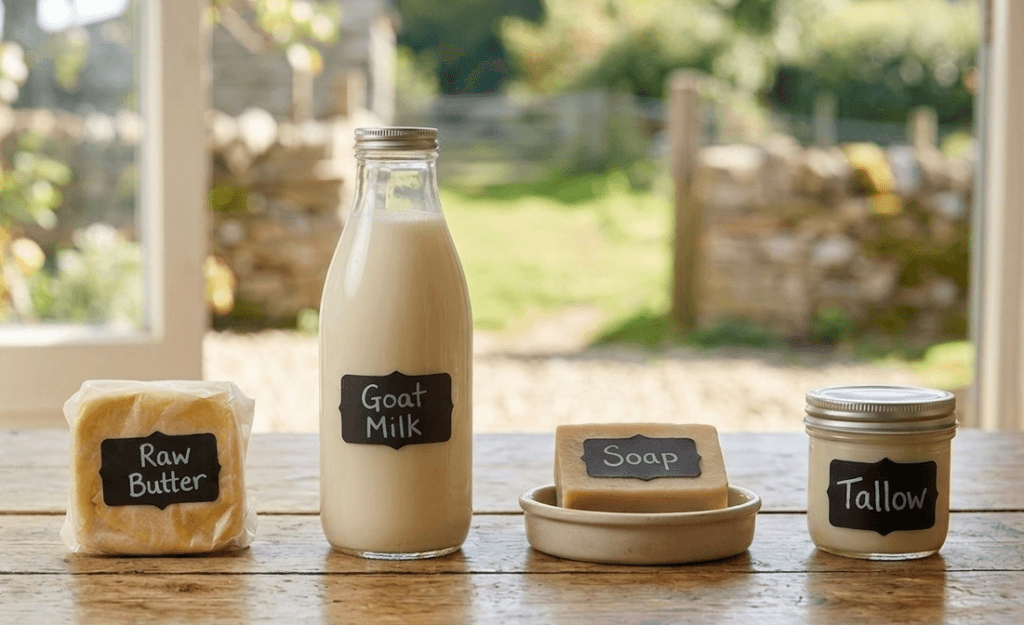
- Goat: A source of naturally homogenized milk widely used for drinking and making soap.
- Ground Beef: Often available from dairy farms utilizing pasture-raised steers.
- Guernsey: A cow breed famous for “Golden Milk,” high in Beta-carotene and A2 proteins.
H
- Hay: Grass or legumes that have been mowed and dried to be used as storable winter feed.
- Heifer: A young female dairy animal that has not yet given birth to her first calf.
- Heritage Breed: Traditional livestock breeds not modified for industrial high-volume production.
- Herd Share: A legal agreement where you purchase a share of an animal, giving you the right to the milk produced. This is a primary factor in the herd share vs retail sales legal debate.
- Holstein: Known for high volume and a distinct black-and-white coat.
- Home Delivery: A category where the farmer delivers raw products directly to your doorstep.
J
- Jersey: A popular breed known for producing milk with the highest butterfat and protein content.
K
- Kefir: A fermented, probiotic-rich drink made by adding kefir grains to raw milk.
L
- Lab Tested: Indicates the farm uses a third-party laboratory to verify bacterial counts and raw milk pathogen testing.
- Lactation: The period during which a female mammal produces milk.
- Licensed: A farm that has met all state requirements to legally sell raw milk.
- Listeria: A hardy pathogen that farmers guard against through strict Cold Chain management.
M
- Mastitis: An inflammation of the udder; farmers monitor this by checking the Somatic Cell Count (SCC).
- Methane Digester: Technology used on some larger farms to convert manure into renewable energy.
- Milking Shorthorn: One of the oldest recognized breeds, known for being versatile and hardy.
N
- Non-GMO: Feed or pasture that has not been genetically modified.
O
- On-Farm Store: A retail shop located directly on the farm premises.
- Organic: Farming practices that avoid synthetic pesticides, fertilizers, and antibiotics.
P
- Pasture-Raised: A method where animals spend the majority of their time grazing on living grass.
- Pet Food Only: A labeling requirement in certain states for raw milk not intended for human consumption.
- Poultry: Fresh chicken or turkey often sold by diverse family farms.
R
- RAMP (Risk Analysis Management Plan): A food safety plan used to identify and eliminate contamination risks.
- Raw Butter: Butter churned from unpasteurized cream, preserving natural enzymes.
- Raw Cream: The high-fat layer that rises to the top of raw milk.
- RAWMI Listed: A farm officially listed with the Raw Milk Institute following strict safety protocols.
- Red & White: A dairy breed similar to the Holstein but with a distinct red-and-white coat pattern.
- Retail: A category for stores or markets that carry raw dairy products.
- Rumen: The largest of the four compartments in a cow’s stomach, acting as a fermentation vat for grass and forage.
- Ruminant: Animals (like cows, goats, and sheep) that have a four-compartment stomach and digest food through the process of rumination (chewing cud).
S
- Salmonella: A pathogen kept out of milk through meticulous udder preparation.
- Sheep: A nutrient-dense milk source with high solids, perfect for yogurt and cheese.
- Silage: Fermented, high-moisture forage (usually corn or grass) stored in a Silo. It provides preserved nutrients for the herd during non-growing seasons.
- Soap: Often made with raw goat or donkey milk for its moisturizing properties.
- Somatic Cell Count (SCC): A measure of white blood cells in milk; lower numbers indicate a healthier animal.
- Soy-Free: A feed protocol that excludes soy for hormonal or allergic reasons.
- Standard Plate Count (SPC): A test that measures the total bacteria in milk to ensure cleanliness.
- Steak: High-quality beef cuts often available at the On-Farm Store.
T
- Tallow: Rendered animal fat used in cooking or as a base for soap.
- Teat: The part of the Udder through which milk is extracted. Most cows have four, while goats and sheep have two.
- TMR (Total Mixed Ration): A precise blend of forage, grains, and minerals mixed together so every bite the animal takes is nutritionally balanced.
W
- Water Buffalo: A rare dairy animal that produces incredibly rich, creamy milk with high butterfat.
- Whey: The liquid byproduct that remains after the Curds have been separated during cheese making.
Y
- Yogurt: A fermented dairy product; raw versions contain active live enzymes.
Using Our Raw Milk Glossary
When browsing our location pages, you will see many of these terms used as tags. By referencing this raw milk glossary, you can verify the truth and facts behind every farm listing. For the specific rules in your area, please consult our laws section to see how these terms apply to your local regulations.
Using a comprehensive raw milk glossary is the best way to ensure you are speaking the same language as your local producer, leading to a safer and more rewarding dairy experience.
Using a comprehensive raw milk glossary is the best way to ensure you are speaking the same language as your local producer. For more information on high-authority safety standards and raw milk pathogen testing, visit the Raw Milk Institute.