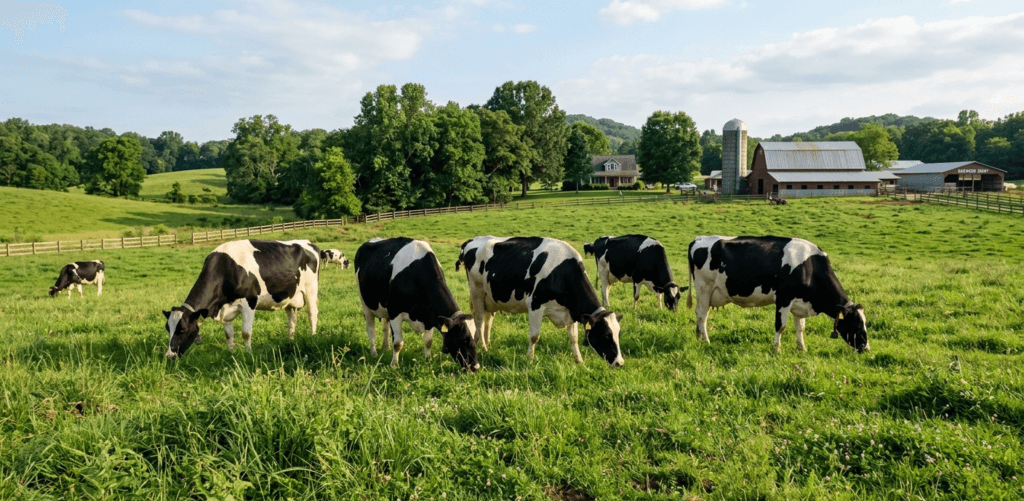
Getting Started With Fresh Dairy
You might be asking what is raw milk as you search for healthier food options for your home. Raw milk is milk as nature intended. It comes straight from the cow or goat without pasteurization or homogenization. This means nothing is added and nothing is taken away.
Many beginners start here because they want to understand the difference between store-bought dairy and farm-fresh options. You want to know if the benefits are real and if the milk is safe to drink. This guide uses verified data to explain why people are returning to this ancient food source.
Choosing fresh dairy is about connecting with your local food system. It is about finding a product that is fresh and unprocessed. Here are the five proven facts that explain what is raw milk and how it supports your health.
Fact 1: What is Raw Milk and Why it Retains a Full Nutritional Profile
The first fact to understand is that raw milk is a complete food. It is very similar to breastmilk because both are natural and fresh. Raw milk contains a wide variety of essential nutrients, fats, and proteins. It also has anti-inflammatory and digestive enzymes that help your body work well.
When milk is heated during pasteurization, many of these nutrients change. Heat destroys or reduces levels of vitamin C and B vitamins. It also destroys enzymes like lactase and phosphatase. Phosphatase is vital because it helps your body absorb calcium and other minerals.
Research shows that people who drink raw milk often have better bone density because of these active enzymes. You also get the benefit of unhomogenized fat. In raw milk, fat globules remain their natural size. In processed milk, these particles are smashed so they stay suspended. Some people worry that these tiny fat particles pass straight into the bloodstream and cause issues.
Fact 2: Science Shows Protection Against Allergies and Asthma
A second proven fact involves your respiratory health. Large studies in Europe have found that drinking what is raw milk correlates with lower rates of asthma and allergies. The GABRIELA study of over 8,000 children showed that raw milk consumption is inversely associated with hay fever and atopy.
These benefits are not just for children living on farms. A 2019 meta-analysis showed that children in rural areas who do not live on a farm still profit from raw milk. The protection seems to come from raw whey proteins that are denatured when heated to 149 degrees Fahrenheit.
Children who drink raw milk also have lower rates of ear infections and fevers. One study of 983 infants found that raw milk reduced the risk of respiratory infections by about 30 percent. This effect is comparable to the anti-infective properties of breastfeeding.
Allergies and Raw Milk – Sarah Smith – RAWMI
Fact 3: Raw Milk Improves Your Digestive Health
The third fact focuses on how your gut handles dairy. Raw milk facilitates the production of the lactase enzyme in your intestinal tract. This allows many people who are lactose intolerant to drink raw milk without pain or nausea.
Many testimonials support this finding. One consumer reported that her daughters suffered from severe stomach pains with pasteurized milk but had no symptoms with raw milk. Another person noticed that their feelings of discomfort disappeared after switching to raw dairy.
Raw milk also increases the abundance of probiotic Lactobacillus in your gut. A human gut microbiome study found that consuming raw milk led to a significant increase in this beneficial bacteria. This supports a healthy immune system and helps you recover from antibiotic use.
Fact 4: Intentionally Produced Raw Milk is a Low Risk Food
The fourth fact addresses the question: is it safe? When evaluating what is raw milk, you must understand that there are two types of production. One type is intended for pasteurization and is often produced in filthy conditions. The other type is intentionally produced for direct human consumption.
Farmers who produce milk for direct consumption follow strict standards. They manage animal health to prevent infections like mastitis. They also use rapid chilling and sterile equipment to keep bacterial counts low.
Data from RAWMI listed dairies shows that thousands of milk samples contained zero pathogens. These farmers meet standards that are often stricter than those for pasteurized milk. For example, the RAWMI standard for coliforms is less than 10 per mL, while some states allow much higher counts for pre-pasteurized milk. When you buy from a trained farmer, you are getting a low risk food.
Fact 5: Raw Milk Ferments Naturally Instead of Spoiling
The final fact is about the life cycle of your milk. Raw milk does not spoil or rot like pasteurized milk does. Instead, it undergoes a process called fermentation. Understanding the fermentation process is key to learning what is raw milk and how it differs from pasteurized dairy. The natural probiotics in the milk consume the lactose and cause the milk to sour.
This soured milk is called clabbered milk. It is a drinkable style yogurt that is safe and healthy to consume. Clabbered milk has higher levels of enzymatic activity which can enhance its nutrient levels. You can use this soured milk in cooking or drink it directly for a probiotic boost.
Raw milk typically stays fresh for drinking for about 1 to 2 weeks in the refrigerator. If you keep it in the coldest part of your fridge, you extend its freshness. You can even freeze raw milk without losing its nutrition. This versatility makes it a valuable staple for any kitchen.
How to Evaluate a Local Farm
When you search for what is raw milk in your area, you need to know what to look for at a farm. Check your local laws to see how milk can be sold near you. When you visit a farm to see what is raw milk quality looks like in person, use this checklist.
- Look at the Living Conditions: Are the cows on lush pastures or standing in manure?
- Check the Equipment: Is the milking parlor clean and neat?
- Ask About Testing: Does the farmer test for bacteria and pathogens regularly?
- Standard Plate Count: Ask if their SPC is consistently below 5,000 cfu per mL.
- Coliform Count: Ask if their coliform count is below 10 cfu per mL.
- Chilling Process: Does the farm use flash refrigeration to cool the milk quickly?
Meeting your farmer allows you to see the care they put into their herd. You can see if they avoid antibiotics, steroids, and hormones. A transparent farmer will be happy to answer your questions about their safety protocols.
Taking the Next Step With Your Health
Understanding what is raw milk helps you make better choices for your family. This guide shows that what is raw milk provides is a nutrient-dense food with proven health correlations. Whether you want to improve your digestion or support your immune system, fresh dairy is a powerful tool.
Connecting with a local farm helps you take control of your nutrition. You are supporting farmers who prioritize animal welfare and clean production. Use resources like ours to find a producer near you.
Always trust your senses when using fresh dairy. If the milk smells fine but is slightly tart, use it in a recipe or a smoothie. Be honest with your farmer about what you are looking for in a milk source. By following these steps, you can enjoy the many benefits of raw milk with confidence and peace of mind.
Unlike pasteurized milk which spoils and becomes putrid when its protective bacteria are destroyed, raw milk naturally ferments through its own live enzymes and probiotics. These “friendly” bacteria consume the milk’s lactose, creating a natural preservation process that causes the milk to sour rather than rot. This means soured raw milk remains safe to consume, essentially transforming into a new, nutrient-dense food instead of becoming waste.
Be honest about your health needs and consult your local farmer if you have specific concerns about their production methods.
Confused by Dairy Terms?
From A2/A2 protein to the specifics of the Holstein breed, our glossary breaks down the technical side of fresh dairy. Learn more about the animals and standards behind your milk.
Explore the Raw Milk Glossary
Author: Team FRM
The FindingRawMilk Team is dedicated to building the most comprehensive and transparent directory for raw milk enthusiasts. Our mission is to bridge the gap between local farms and consumers by providing verified listings, clear state-by-state legal guides, and educational resources. We believe in the importance of food freedom and strive to make sourcing high-quality, farm-fresh milk as simple as a single search.



Leave a Reply