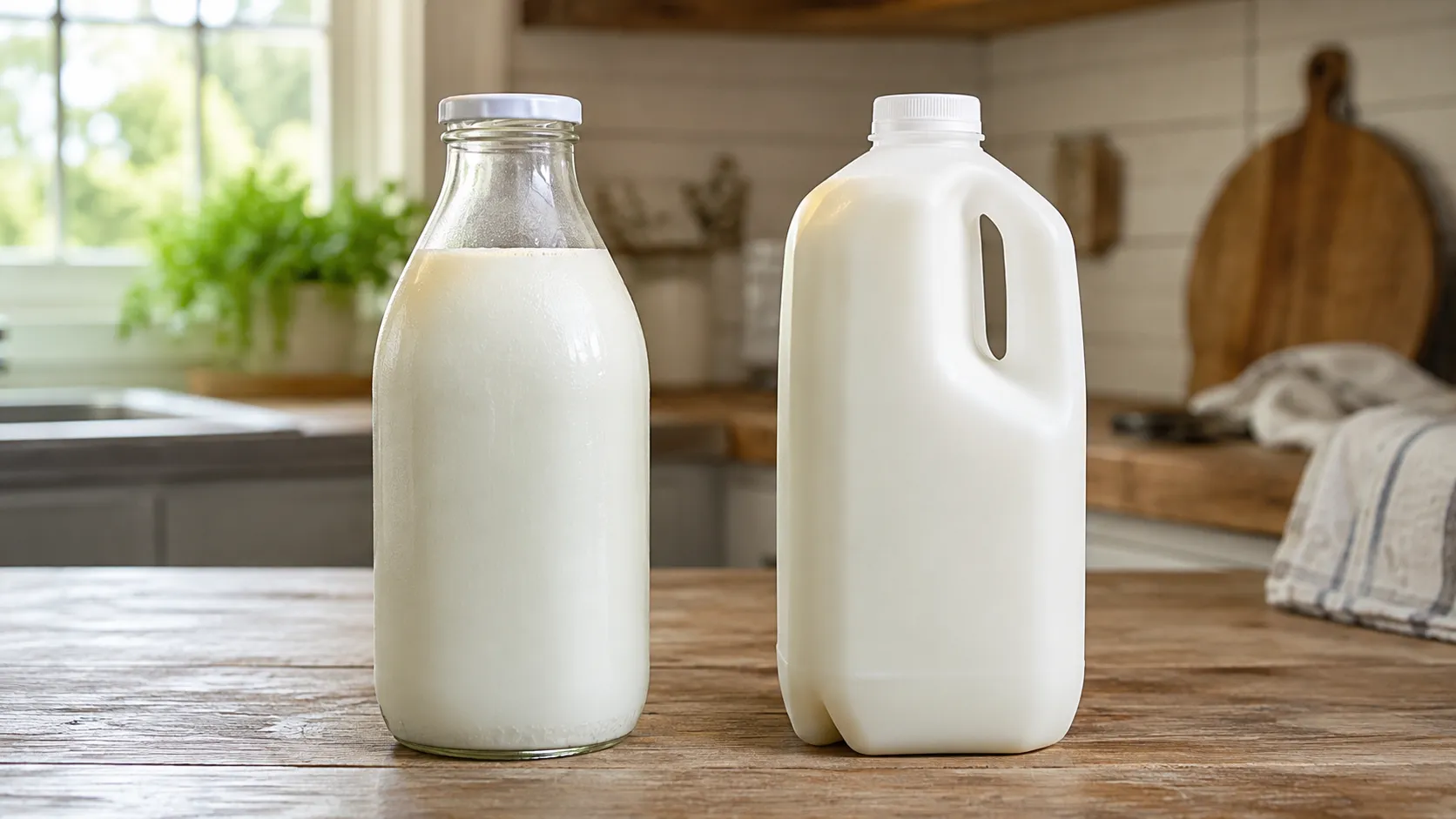
When comparing raw milk vs. pasteurized milk, consumers find that while both begin at the dairy farm, they take very different paths to the kitchen table. Understanding the debate surrounding raw milk vs. pasteurized milk requires looking at processing methods, nutritional profiles, and food safety standards.
For many people, choosing between raw milk vs. pasteurized milk is about more than basic nutrition. It can involve flavor, cream texture, local sourcing, animal welfare, ingredient purity, and personal experience with dairy. To learn more about how farming practices and processing impact flavor and quality across all dairy types, explore our comprehensive Better Milk Guide.
This guide breaks down the science, history, and practical differences of raw milk vs. pasteurized milk so you can make an informed decision.
What Is Raw Milk?
Raw milk is milk that has not undergone heat pasteurization. In its simplest form, it is milk collected from a dairy animal, cooled promptly, stored cold, and sold without heat treatment intended to kill microorganisms. To explore its full definition, characteristics, and farming practices, learn more in our complete guide to what raw milk is.
Depending on the farm and product, raw milk may also be:
- Full-fat or “whole” milk, retaining all natural milkfat.
- Non-homogenized, meaning the cream layer rises naturally to the top.
- From grass-fed, pasture-raised, or mixed-ration-fed animals.
- From cows, goats, sheep, water buffalo, or other dairy animals.
- Bottled on the farm or distributed through permitted retail, herd-share, delivery, or farm-pickup channels, depending on state law. You can check whether raw milk is legal in your state before purchasing.
Raw milk is not necessarily synonymous with organic, grass-fed, A2, non-homogenized, low-temperature processed, or local. Those are separate production and marketing characteristics. Ask the farm directly about its animals, feed, milk-testing program, bottling, handling, and distribution practices.
What Is Pasteurized Milk?
Pasteurized milk is milk that has been heated for a defined time and temperature to reduce potential pathogens. A common conventional method is High-Temperature Short-Time (HTST) pasteurization: milk is heated to at least 161°F (72°C) for at least 15 seconds and then rapidly cooled. Standard pasteurization guidelines also include batch processing (Low-Temperature Long-Time or LTLT) at 145°F (63°C) for 30 minutes.
The primary purpose of pasteurization is food safety. It is designed to reduce microorganisms that may cause foodborne illness, including Campylobacter, Salmonella, Shiga toxin–producing E. coli, and Listeria monocytogenes.
Pasteurized milk is not necessarily homogenized, ultra-pasteurized, lactose-free, reduced-fat, organic, grass-fed, or heavily formulated. Those are separate processing and product choices made by the dairy.
Historical Context: Louis Pasteur and Wine
Understanding the history of Louis Pasteur clarifies how heat treatment came to be used in modern food production. Pasteurization is named after the French scientist, but his original research was driven by wine, not milk.
- The Wine Problem: In the 1860s, Napoleon III asked Pasteur to investigate why French export wines were souring and turning into vinegar-like products. Pasteur used microscopy to prove that specific microorganisms were responsible for wine spoilage.
- The Solution: On April 11, 1865, Pasteur patented a process of heating wine to roughly 55–64°C (131–147°F) to inactivate spoilage microbes without destroying the wine’s flavor or aroma. His original question was not “How do we make milk safe?”, but “Why is wine spoiling, and can we stop the microbes responsible without ruining the product?”
- Transition to Milk: The controlled heating of liquids existed prior to Pasteur (e.g., Nicolas Appert in 1831), but Pasteur provided the microbiological explanation for why it worked. By the 1870s and 1880s, his principle of controlled heating was adapted to dairy in Europe, and eventually mandated in major U.S. cities like New York and Chicago by 1911 to curb infant mortality caused by contaminated municipal milk supplies.
Wine vs. Milk Processing Comparison
| Feature | Pasteur’s Wine Work | Modern HTST Milk Pasteurization | UHT Milk Processing |
| Original Purpose | Control spoilage and “wine diseases” after fermentation | Reduce foodborne pathogens in perishable raw milk | Reach commercial sterility for extended shelf life |
| Typical Heat Range | ~55–64°C (131–147°F) | At least 72°C (161°F) for 15+ seconds | ~135–150°C (275–302°F) for 2–5 seconds |
| Role of Microbes | Preserve desired fermented character while stopping spoilage | Significantly reduce pathogens and total microbial counts | Eliminate virtually all bacterial life, including spore-formers |
| Storage Outcome | Stable aging and transport in standard bottles | Extended refrigerated shelf life | Shelf-stable unopened at room temperature |
Modern milk pasteurization uses higher temperatures and different parameters than Pasteur’s wine process, but it relies on the same core principle: using targeted heat to manage microbial growth.
Raw Milk vs. Pasteurized Milk at a Glance
| Feature | Raw Milk | Pasteurized Milk |
| Heat Treatment | Not heat-pasteurized | Heated according to a specified time–temperature process |
| Microorganisms | Retains its naturally occurring microbial population | Pathogenic and spoilage microorganisms are drastically reduced |
| Native Enzymes & Proteins | Retains heat-sensitive enzymes and native whey proteins | Some heat-sensitive enzymes and whey proteins are altered or denatured |
| Cream Layer | Almost always non-homogenized; cream rises to the top | May be homogenized (fat dispersed) or non-homogenized |
| Ingredient List | Typically 100% raw milk | May be just milk, or fortified with Vitamin D, Vitamin A, or stabilizers |
| Shelf Life | Shorter; requires strict, uninterrupted cold storage | Longer refrigerated shelf life; UHT variants can be shelf-stable unopened |
| Sourcing | Bought directly from local dairies, farm stands, or herd shares | Processed, pooled, and distributed regionally or nationally |
| Safety Approach | Relies on herd health, sanitation, rapid chilling, and routine testing | Uses heat processing as a final microbial risk-reduction step |
How Pasteurization Changes Milk
When evaluating raw milk vs. pasteurized milk, it helps to understand that pasteurization is not a single uniform process. The degree of physical and chemical change depends on the temperature, duration, whether the milk is homogenized, and how it is stored.
HTST Pasteurization
HTST is the standard process used for most refrigerated grocery store milk. It heats milk to at least 161°F (72°C) for 15 to 20 seconds. This process inactivates pathogens while maintaining a familiar taste, texture, and core macronutrient profile.
Ultra-Pasteurized and UHT Milk
Ultra-High-Temperature (UHT) processing uses intense heat—commonly 275–302°F (135–150°C) for 2 to 5 seconds. Packaged aseptically, UHT milk can remain shelf-stable unopened for months. Because UHT uses significantly higher heat than HTST, it causes greater denaturation of heat-sensitive proteins and can create noticeable “cooked” or caramelized flavor notes due to the Maillard reaction.
Homogenization vs. Pasteurization
Homogenization is a mechanical process—not a heat treatment. It forces milk through small apertures under high pressure to break fat globules into tiny particles so cream stays suspended rather than rising to the top. Milk can be pasteurized without being homogenized (often sold as “cream-top” milk).
What Happens to Enzymes and Nutrients During Pasteurization?
A major point of comparison in raw milk vs. pasteurized milk is how processing affects nutritional and enzyme activity. Raw milk is a whole food containing native proteins, fats, carbohydrates, vitamins, minerals, enzymes, and a complex microbial environment.
Native Enzymes
Raw milk contains naturally occurring enzymes, such as lipase, protease, alkaline phosphatase, lactoperoxidase, and lysozyme. Some of these enzymes are heat-sensitive and lose activity during heat treatment.
For example, alkaline phosphatase is inactivated under standard pasteurization conditions, making its absence a regulatory benchmark to verify successful pasteurization. Lactoperoxidase is more heat-stable, but can still lose activity under higher heat conditions. While raw milk retains a broader spectrum of active native enzymes, human digestive enzymes produced naturally in the stomach and intestines carry out primary digestion.
Proteins and Bioactive Compounds
Milk contains two main protein categories: caseins and whey proteins. Caseins are heat-stable, whereas whey proteins—such as lactoferrin, immunoglobulins (IgG, IgA), alpha-lactalbumin, and beta-lactoglobulin—are more heat-sensitive. Research shows that raw milk retains these proteins in their native structural states, whereas heat treatment can alter or denature certain sensitive whey proteins depending on the temperature used.
Vitamins and Minerals
Both raw and pasteurized milk are strong sources of protein, calcium, phosphorus, potassium, riboflavin, and Vitamin B12.
Heating milk can cause slight reductions in heat-sensitive, water-soluble vitamins, such as Vitamin C and folate. However, because fluid milk is not a primary dietary source for Vitamin C or folate, scientific reviews generally conclude that standard pasteurization causes minimal overall impact on milk’s net nutritional value. Major minerals like calcium and magnesium remain stable during heat processing.
Microbes and Fermentation
Raw milk contains a varied, naturally occurring microbial profile, including beneficial lactic acid bacteria like lactobacilli and bifidobacteria. This living microbial community contributes to raw milk’s complex flavor profile and makes it ideal for traditional home fermentation (such as making clabber, kefir, or raw cheeses). However, because this native microbiome can also harbor pathogens if contamination occurs, strict sanitation and rapid chilling are essential.
Raw Milk vs. Pasteurized Milk Regarding Allergies and Asthma
One of the most actively researched areas surrounding raw milk vs. pasteurized milk is the potential association with lower rates of allergic diseases.
European observational studies have consistently found that children who consumed unprocessed farm milk had lower rates of asthma, allergic rhinitis (hay fever), and atopic sensitization compared to children who drank pasteurized store milk. Meta-analyses pooling data across multiple studies confirm an association between early-life raw milk consumption and reduced odds of developing childhood asthma and allergies.
Researchers hypothesize that heat-sensitive whey proteins, immunoglobulins, higher omega-3 fatty acid levels, or raw milk’s microbial environment may contribute to this protective effect. However, because these studies are observational, they show an association rather than absolute causation. Broader lifestyle factors associated with growing up on or near farms (such as exposure to livestock, outdoors, and farm dust) also play a role in immune system development.
Raw Milk vs. Pasteurized Milk for Lactose Intolerance
A common reason consumers compare raw milk vs. pasteurized milk is the belief that unpasteurized dairy is easier to digest. Many individuals who experience digestive discomfort from conventional store-bought milk report that they can drink raw milk without issues.
From a strict biochemical standpoint, raw milk contains lactose in amounts virtually identical to pasteurized milk (roughly 4.8%). Raw cow’s milk does not naturally contain lactase—the enzyme required to break down lactose. A clinical trial conducted at Stanford University found that raw milk did not reduce lactose malabsorption or self-reported digestive symptoms in lactose-intolerant adults compared to pasteurized milk.
Why, then, do many people report better tolerance? Hypotheses include:
- Differences in fat globule structure and lack of mechanical homogenization.
- Preferences for A2 beta-casein protein profiles (many small raw dairies raise heritage breeds that produce A2 milk).
- Differences in freshness, total diet, or natural dairy matrices.
While personal experiences vary, raw milk contains lactose and should not be considered a medical treatment for lactose intolerance.
Ingredients and Fortification in Store-Bought Milk
When purchasing milk at a supermarket, the label may list more than just milk:
- Vitamin D3: Frequently added to fluid milk to enhance calcium absorption and support bone health.
- Vitamin A Palmitate: Added to low-fat and skim milks to replace the fat-soluble Vitamin A that is removed when milkfat is skimmed off.
- Lactase Enzymes: Added to specific lines to produce lactose-free pasteurized milk.
- Stabilizers or Emulsifiers: Found in some ultra-pasteurized or flavored dairy beverages to maintain texture and shelf stability.
Raw milk, by contrast, contains a single ingredient: pure, unfortified, full-fat raw milk, exactly as produced by the animal.
Raw Milk Safety and Informed Sourcing
Because raw milk does not undergo heat processing to kill bacteria, food safety relies entirely on farm management, animal health, strict hygiene during milking, rapid chilling, and maintaining an unbroken cold chain. Once you purchase fresh milk, learn how to properly store raw milk at home to maximize its freshness and shelf life.
Public health agencies (CDC) emphasize that unpasteurized dairy poses a higher statistical risk of foodborne illness caused by pathogens like Salmonella, E. coli, and Listeria. Vulnerable populations—including infants, pregnant individuals, elderly adults, and those with compromised immune systems—are advised by health authorities to avoid raw dairy products due to these potential risks.
For consumers who choose raw milk, sourcing from transparent, high-standard dairies is key. For a deeper breakdown of personal choice, risk management, and the legal framework surrounding unpasteurized dairy, read our detailed overview on Raw Milk Safety, Risks, Benefits, and Personal Choice.
Key Questions to Ask Your Local Raw Dairy:
- Testing Practices: How frequently is the milk tested for pathogens and coliform count, and are testing results shared transparently?
- Cooling Protocol: How quickly is the milk chilled down to under 40°F (4°C) after milking?
- Animal Health & Feed: Are the animals pasture-raised or grass-fed, and how does the farm monitor herd health and mastitis?
- Sanitation Standards: What cleaning processes are used for the milking equipment, bulk tanks, and bottling systems?
- Licensing: Is the farm operating under state inspection, permits, or herd-share agreements compliant with local laws?
Summary: Which Milk Is Right for You?
When choosing between raw milk vs. pasteurized milk, the right option depends on your personal health priorities, lifestyle, and access:
- Choose Raw Milk if you prioritize direct relationships with local farmers, unpasteurized/unhomogenized whole foods, native enzymes and proteins, traditional flavor profiles, and supporting pasture-based farming.
- Choose Pasteurized Milk (HTST) if you want a widely available product with an extra safety step to eliminate pathogens, predictable shelf life, and solid core nutrition.
- Choose Non-Homogenized Pasteurized Milk if you prefer a cream-top bottle with minimal physical processing, but still want standard pasteurization.
- Choose UHT / Ultra-Pasteurized Milk if long unopened shelf-life or non-refrigerated storage is your primary requirement.
Related Guides & Resources
To learn more about dairy choices, processing, safety, and sourcing, explore these guides:
- Better Milk Guide – Discover how breed selection, grass-feeding, non-homogenization, and processing levels influence milk quality and taste.
- Raw Milk Safety, Risks, Benefits, and Personal Choice – An in-depth discussion on evaluating farm standards, managing risks, and navigating legal regulations.
Find Raw Milk Near You
FindingRawMilk.com helps consumers connect with local raw milk farms, herd shares, farm stands, and retail stockists compliant with state regulations. If you are ready to start sourcing from a local farm, discover where to buy raw milk near you using our interactive directory.
Use our directory to discover transparent, local dairies in your area, contact them directly, ask about their production and testing standards, and source fresh raw milk for your household.