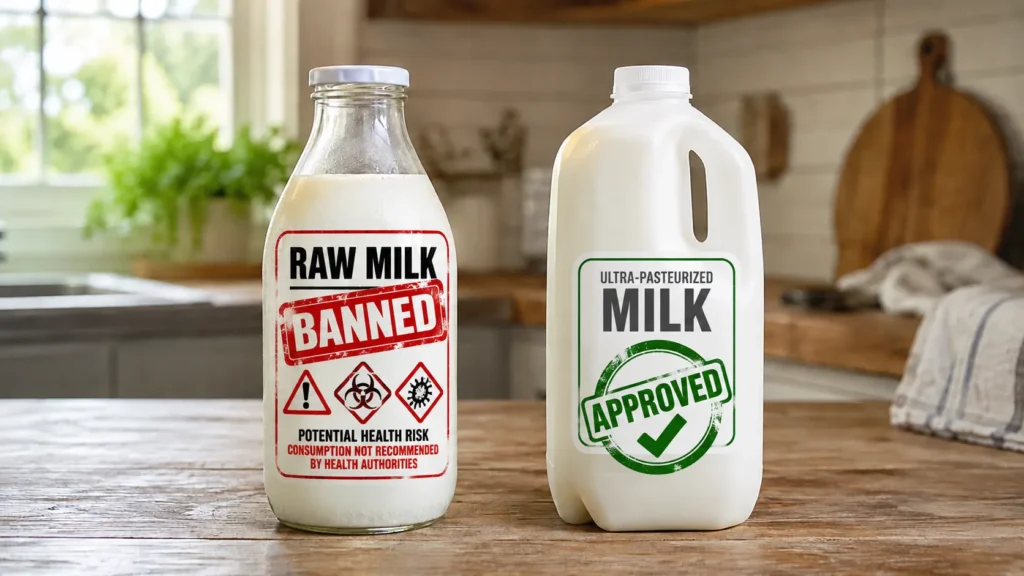
The American Academy of Pediatrics wants a nationwide raw milk ban. But does the existence of risk automatically justify prohibition? From farm-level safety standards to milk processing, nutritional claims, and consumer choice, it is time to look at the bigger picture.
The renewed push for a raw milk ban raises a broader policy question: should eliminating a risk always take precedence over regulating it and helping consumers make informed decisions?
The debate over a raw milk ban is heating up. On October 5, 2026, the American Academy of Pediatrics (AAP) renewed its call for a nationwide ban on the sale and distribution of raw milk and raw dairy products, citing the risk of foodborne illness and its concerns about claims of superior nutritional benefits.
Let’s establish something upfront: raw milk is not risk-free. Harmful microorganisms can be present even when milk looks, smells, and tastes perfectly normal. Serious foodborne illness is possible, and the risks deserve to be taken seriously.
But acknowledging a risk is not the same as agreeing that a nationwide ban is the right response.
Should an entire category of food be prohibited because it carries risk, even when some farmers invest heavily in responsible production, testing, sanitation, and refrigeration?
That is the question at the heart of this debate—and answering it requires looking beyond the latest outbreak headline.
Raw Milk Safety: What Does a Raw Milk Ban Actually Solve?
When people discuss raw milk, the conversation often begins and ends with one question: Has the milk been pasteurized?
That distinction matters for food safety. Pasteurization uses controlled heat treatment to destroy disease-causing microorganisms, substantially reducing the risk of milkborne infection. Raw milk has not undergone that treatment and can carry pathogens including Campylobacter, Salmonella, Listeria, and certain strains of E. coli.
Remember these two not long ago: Publix E. coli Outbreak via berries and Cyclospora parasite outbreak via iceberg lettuce
The AAP and the Centers for Disease Control and Prevention (CDC) are right to take these hazards seriously, particularly because some infections can have devastating consequences for young children, pregnant people, older adults, and people with weakened immune systems.
But there is more to the story of milk than whether it has been heated.
Raw milk begins as milk produced by an animal on a farm. In a well-managed operation, the process involves attention to herd health, sanitary milking, clean equipment, appropriate testing, rapid cooling, and maintaining refrigeration throughout handling and storage.
The objective is to produce a fresh food while minimizing opportunities for contamination.
Ultra-pasteurized milk follows a different path. It undergoes a much more intense heat treatment than conventional pasteurization. When combined with appropriate aseptic packaging, this allows it to remain shelf-stable for an extended period while unopened. Once opened, it still requires refrigeration and eventually rots and spoils.
These products serve different purposes in the food system. One is generally sold as a fresh, refrigerated product with a shorter usable life; the other is processed and packaged to extend its unopened shelf life and simplify distribution.
Neither description alone establishes whether a particular product is safe, nutritionally superior, or inferior. But their different production methods and characteristics are worth understanding.
If we are going to debate raw milk, we should be willing to discuss the whole product—not just whether it has been heated.
From the Farm to the Shelf: Two Different Approaches to Milk
For people who choose raw milk, part of its appeal is the connection to the farm and the food itself.
Milk is collected from a living animal, handled at the farm, cooled, and kept refrigerated. Customers may purchase it directly from the producer, know where it comes from, and learn how the farm manages its herd and milk-handling practices.
That relationship can encourage transparency and accountability. It can also give consumers an opportunity to ask questions about testing, sanitation, animal health, and how the milk is handled.
Of course, buying directly from a farmer does not automatically make milk safe. A trusted relationship is not a substitute for good practices, and a clean-looking farm cannot guarantee the absence of pathogens.
Nevertheless, there is value in examining how food is produced rather than treating every product within a category as identical.
Commercially distributed milk may pass through collection, processing, packaging, storage, transportation, and retail distribution before reaching the consumer. These steps are part of a system designed to make milk widely available, consistent, and convenient.
Ultra-pasteurization and aseptic packaging also serve a specific purpose: they extend the time milk can remain unopened without refrigeration. This can be useful for transportation, storage, and consumers who want a product with a longer shelf life.
But extended shelf life is not the same thing as being imperishable. Ultra-pasteurized milk eventually spoils, particularly after opening. Raw milk also spoils (ferments and sours over time) and requires careful refrigeration from the beginning.
The difference is that raw milk’s safety depends heavily on the quality of production and handling, while pasteurization adds a validated pathogen-reduction step.
That distinction matters. It should be acknowledged honestly, without pretending that careful farming eliminates every risk or that processing makes the entire supply chain infallible.
But why should the existence of a microbial risk automatically end the discussion about whether fresh milk can be sold under rigorous, enforceable standards?
That question deserves a real answer.
Raw Milk Is a Food, Not Just a Risk Category
Food is more than a list of potential hazards.
People choose what they eat based on flavor, freshness, tradition, how it is produced, how it is processed, and how they intend to use it. Some prefer to purchase food directly from local farms. Others want to know the farmer, understand the production practices, or use fresh milk to prepare other foods.
Raw milk has a long history of use in making cream, butter, cultured dairy products, and cheese. Different products require different techniques and handling practices, and some preparations introduce additional food-safety considerations.
Still, raw milk’s versatility is part of why people seek it out.
The AAP argues that raw milk does not offer established nutritional advantages that outweigh its additional risk of infection. It concludes that pasteurized milk provides comparable nutritional benefits without that additional risk.
That is the organization’s position. But it does not mean every question consumers ask about food quality, processing, or nutritional composition is automatically answered.
Someone can acknowledge the risks of raw milk while still valuing minimally processed foods, farm transparency, traditional food preparation, and the ability to make informed choices.
Those preferences do not prove raw milk is safer. They do, however, help explain why the debate cannot be reduced to a single question about heat treatment.
If Conventional Milk Is Nutritionally Equivalent, Why Are Nutrients Added?
| TOP BENEFITS | RAW COW MILK | PASTEURIZED COW MILK |
|---|---|---|
| Enzymes | Active | Inactive |
| Probiotics | Active | Destroyed |
| Healthy Fats | Active | Altered |
| Proteins | Active | Altered |
| Vitamins | Active | Destroyed |
| Calcium | Active | Inhibited |
Walk down the dairy aisle and look at the front of today’s milk cartons.
Added vitamin D. Added vitamin A. Added omega-3 fatty acids. Labels and advertisements highlight nutritional features designed to mask what has been heavily processed and stripped in a factory.
This raises a hard question: What exactly are we comparing when conventional dairy advocates claim pasteurized dairy and raw dairy offer the same natural quality?
First, an important clarification: fortification proves that high-heat processing strips away or denatures native elements. The larger discussion about heat treatment cannot be glossed over either. Conventional pasteurization at 161°F (72°C) degrades heat-sensitive nutrients and alters native proteins. Different heat treatments change the food matrix in ways that cannot be hand-waved away as harmless. Ultra-high-temperature (UHT) processing pushes heat far beyond standard pasteurization to achieve extended shelf life, drastically altering the milk’s chemical structure.
When dairies strip fat or alter milk through heat, they wipe out natural structures, forcing an industrial rebuild. That rebuild relies on specific interventions:
1. Why Synthetic Vitamins Are Added to Pasteurized Milk
- Fat Removal: In whole raw milk, fat-soluble vitamins (A and D) naturally bind to intact milk fat globules. When commercial dairies separate cream to make skim, 1%, or 2% milk, the natural Vitamin A is stripped away along with the fat.
- FDA Mandatory Fortification: U.S. federal regulations require processors to fortify lower-fat milks with synthetic Vitamin A (usually Vitamin A palmitate) to restore baseline nutritional levels. Vitamin D3 fortification is optional but heavily encouraged across fluid milk products.
2. The Role of Carrier Oils and Emulsifiers
- Solubility Challenge: Pure Vitamin A palmitate and D3 are oil-soluble compounds that cannot naturally mix with watery liquid milk.
- Industrial Formulations: Dairies use concentrated liquid vitamin premixes where synthetic vitamins are dissolved in carrier oils—frequently refined seed and vegetable oils such as corn oil, soybean oil, or sunflower oil.
- Density & Dispersal: Industrial patent filings and Dairy Practices Council guidelines show these premixes often rely on emulsifiers (such as polysorbate 80 or ester gums) to adjust density and prevent the vitamins from separating during pasteurization or homogenization.
3. Why Seed Oils Do Not Appear on Milk Ingredient Labels
- Incidental Additive Exemption: Under FDA regulations (21 CFR 101.100), incidental additives and processing aids present in a food at insignificant levels—with no technical or functional effect in the final product—are exempt from label declaration.
- Micro-Dose Levels: Because 1 mL of vitamin concentrate can fortify up to 100 quarts of fluid milk, the concentration of carrier oil in a finished carton is microscopic, allowing brands to list simply “Vitamin A Palmitate” or “Vitamin D3” without disclosing the oil carrier.
4. Texturizers, Creamers, and Carrageenan
- Destroying Structure: Ultra-pasteurization destroys the natural fat globule structure, thinning out cream and leaving it prone to curdling or separating when poured into hot coffee.
- Carrageenan and Emulsifiers: To artificially rebuild that lost mouthfeel in heavy cream, half-and-half, and coffee creamers, processors add dipotassium phosphate, mono- and diglycerides, and carrageenan—a red seaweed extract heavily criticized for being linked to gastrointestinal inflammation and digestive distress.
Raw milk and raw cream require none of these industrial tricks. Because raw dairy is never heated, its native proteins, healthy fats, and natural emulsifiers remain intact. The rich mouthfeel comes from actual butterfat—not seaweed extracts, hidden seed oil carriers, or lab-synthesized additives.
Consumers deserve to know what processing changes, what nutrients are stripped away, and what synthetic chemicals are added afterward—without those questions being dismissed.
A meaningful comparison looks at actual nutrient composition and refuses to excuse industrial shortcuts. Nutritional equivalence is a myth when production methods, chemical additives, and natural integrity are fundamentally compromised.
Raw Milk vs. Pasteurized Milk: Differences, Benefits, Processing, and Safety
Shelf Life Is Not the Same as Freshness
Ultra-pasteurized milk offers a practical advantage: when appropriately packaged, it can remain unopened without refrigeration for an extended period. That makes it useful for distribution, storage, and households that value convenience.
But it is not imperishable. After opening, it must be refrigerated and will eventually spoil.
Raw milk also spoils and requires careful refrigeration. It can contain harmful pathogens before any obvious signs of spoilage appear, which is why freshness, smell, and taste cannot establish that it is safe to drink.
7 Best Uses for Soured Raw Milk: 1 Simple Trick for No Waste
Still, the difference between these products is worth recognizing.
One is processed and packaged to provide a longer unopened shelf life. The other is typically sold as a fresh, refrigerated product that depends on careful handling throughout its shorter storage life.
Shelf life is a measure of how long a product can maintain acceptable quality under specified conditions. It is not, by itself, a complete measure of nutritional quality or a ranking of one food’s overall value.
Consumers can appreciate the convenience of shelf-stable products while also valuing fresh foods and shorter supply chains. Those preferences are not mutually exclusive.
The point is not that a longer shelf life makes milk bad, or that fresh milk is automatically safe. It is that food quality, processing, freshness, and food safety are related questions—but they are not the same question.
A public-policy debate should be capable of addressing all of them.
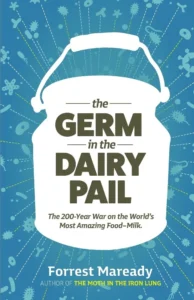
The Germ in the Dairy Pail
Forrest Maready
The Germ in the Dairy Pail explores the history of milk safety, pasteurization, and the changing relationship between Americans and dairy. Forrest Maready examines how concerns about disease, industrialization, and public health transformed milk production and shaped the modern dairy system.
Yes, Raw Milk Carries Risks. What Should We Do About Them?
Let’s return to the most important issue: food safety.
Raw milk can transmit pathogens that cause serious illness. Some infections can lead to complications requiring hospitalization, and the consequences can be especially severe for young children, pregnant people, older adults, and people with weakened immune systems.
The CDC and AAP are right to take those risks seriously.
But recognizing a risk is the beginning of a policy discussion, not necessarily the end of it.
There is a difference between saying that a food carries a higher risk of certain infections and establishing that a nationwide prohibition is the best available policy response.
A ban is one possible response. Other approaches include enforceable production requirements, regular inspections, risk-based microbial testing, documented sanitation procedures, traceability, clear consumer warnings, rapid reporting of contamination, and meaningful penalties for producers who fail to meet established standards.
These measures are not substitutes for pasteurization’s pathogen-reduction effect, and they cannot guarantee that raw milk is free from harmful microorganisms.
The AAP’s position is that the remaining risk is unacceptable and that pasteurization provides a level of protection farm practices alone cannot match.
That is a serious argument. But it is also the argument that supporters of a ban need to make.
Why should prohibition be the preferred policy over a rigorously regulated system? What standards would be required? Which safeguards would be effective? What risks would remain? And why should those remaining risks make legal sales unacceptable regardless of a farm’s practices?
Those are practical questions, not attempts to deny science.
Before embracing a nationwide raw milk ban, policymakers should explain why enforceable farm standards, meaningful inspections, appropriate testing, and transparent accountability would be insufficient. If even the strongest realistic safeguards cannot reduce the risk sufficiently, the evidence should support that conclusion. And if less restrictive alternatives have been evaluated and rejected, the public deserves to understand why.
A policy that affects farmers and consumers across the country deserves more than the assertion that risk exists.
It deserves a transparent explanation of why the proposed response is necessary.
What About Farms That Take Safety Seriously?
Not all farms operate identically. Herd management, sanitation, milking equipment, testing, cooling, and handling practices can differ substantially.
Responsible raw milk producers may invest in preventive measures intended to reduce contamination and identify problems before products reach consumers. Those efforts matter, even though they cannot eliminate all risk.
The Raw Milk Institute (RAWMI), for example, promotes farm-specific risk-management plans, producer education, testing, and practices intended to improve raw milk safety.
RAWMI’s approach provides a concrete example of how risk reduction can be approached at the production level. It is worth examining what the program actually requires, what its tests measure, and what its limitations are.
These standards do not eliminate every risk, but they raise an important question in the debate over a raw milk ban: why not evaluate enforceable safeguards before concluding that prohibition is the only acceptable option?
What RAWMI’s Standards Actually Require
RAWMI’s Common Standards are built around three main components: farmer training and mentoring, an individualized Risk Analysis and Management Plan (RAMP), and bacterial testing.
According to RAWMI’s published standards, listed farmers are expected to:
- Develop a farm-specific risk-management plan that addresses the conditions and practices relevant to their operation.
- Test milk for coliform bacteria at least monthly, with a target rolling three-month average below 10 colony-forming units per milliliter.
- Test for Standard Plate Count (SPC) bacteria at least monthly, with a target rolling three-month average below 5,000 colony-forming units per milliliter.
- Address pathogen testing through their risk-management plan, with the required approach and frequency dependent on the individual plan.
- Follow documented procedures and maintain an ongoing focus on improving farm hygiene and milk handling.
These are specific, measurable targets—not simply a promise that a farm is clean.
But it is equally important to understand what they do not establish.
Coliform and Standard Plate Count tests are indicators of milk hygiene and bacterial quality. They do not directly prove that disease-causing pathogens are absent.
RAWMI’s standards recognize the importance of pathogen testing, while also acknowledging that testing access and frequency can vary. For some small farms without access to pathogen testing laboratories, indicator testing may be used as a general measure of hygiene.
A favorable result therefore should not be interpreted as proof that a batch is pathogen-free. Nor should RAWMI listing be described as government certification or a guarantee of safety.
RAWMI itself acknowledges that its standards cannot guarantee perfectly safe food. Its stated purpose is to reduce risk through training, farm-specific planning, testing, and continued improvement.
That distinction matters because the strongest argument for better standards is not that testing eliminates risk. It is that safety practices should be measurable, transparent, and subject to meaningful accountability.
RAWMI is a voluntary program, not a replacement for government oversight. Whether its approach—or a more stringent, legally enforceable framework based on similar principles—could provide an acceptable level of protection is a question that deserves evidence and serious examination.
Readers who want to see how voluntary farm-level standards are represented in practice can explore our directory of RAWMI-listed farms. Listing is not a guarantee that milk is pathogen-free, and consumers should verify a farm’s current practices and testing directly with the producer.
Should Responsible Farms Be Treated the Same as Every Other Farm?
This raises an important question for policymakers.
If a farmer is willing to meet rigorous, verifiable safety requirements, submit to appropriate inspections, test milk according to established protocols, maintain traceability, and take immediate corrective action when problems arise, should those efforts count for nothing under a policy that prohibits the product regardless of the farm’s performance?
A regulatory system could distinguish between farms that meet enforceable standards and those that do not. It could impose meaningful consequences for noncompliance and require transparency when safety concerns arise.
Whether such a system could reduce risk enough to justify legal sales is a question that requires evidence and careful design. It should not be assumed that voluntary standards alone are sufficient, but neither should the possibility of stronger regulation be dismissed without examination.
A ban treats the sale of the product itself as unacceptable. A standards-based approach asks whether legal production can be governed responsibly.
Those are fundamentally different policy choices.
The Bigger Food System: Why Is Risk Managed Differently Across Different Products?
We live in a food system in which risks exist across many categories.
Produce can become contaminated. Meat can carry pathogens. Seafood can cause illness. Processed foods can contribute to poor dietary patterns when consumed excessively or in place of more nutritious foods.
These hazards are not equivalent. They differ in their causes, severity, frequency, exposure patterns, and available controls. An outbreak linked to one food cannot simply be compared with an outbreak linked to another without considering those differences.
But the broader food system raises a legitimate question about how public policy chooses its interventions.
For many food-safety problems, the response involves a combination of prevention, inspection, testing, recalls, enforcement, and public education. When contamination is discovered, authorities may investigate the source, remove affected products, and work to prevent a recurrence.
Why, then, should raw milk necessarily be treated as a category for which a nationwide sales ban is the only acceptable policy?
The AAP argues that raw milk’s risks are preventable through pasteurization and that the continued availability of raw milk exposes consumers to unnecessary danger.
But the broader policy question remains: Should the law prohibit the product regardless of production practices, or should it consider whether a tightly regulated system can offer an acceptable alternative?
The answer should be based on evidence about actual risks and the effectiveness of proposed safeguards—not on the assumption that all food-related risks must be addressed in the same way.
And What About Junk Food, School Meals, and Vaping?
The AAP is a pediatric organization. Its stated mission is to promote the health and well-being of children. That naturally raises questions about how it approaches the many risks children encounter in everyday life.
Children are exposed to heavily marketed foods and drinks, school food environments, and snacks and concessions at sporting events. Public-health debates also address childhood obesity, sugary drinks, nutrition education, and the marketing of unhealthy products to young audiences.
The AAP has advocated for policies addressing these issues. It has supported measures to improve children’s food environments and reduce consumption of sugary drinks. It would therefore be inaccurate to claim that the organization ignores nutrition-related risks outside raw milk.
But its approach to different issues is worth examining.
Consider vaping. The AAP has advocated for stronger regulation of e-cigarettes, restrictions on sales to young people, limits on youth-directed marketing, and bans on certain flavored products. Its policy work includes both regulatory measures and prohibitions targeting particular products or practices.
The point of bringing up vaping is not to suggest that vaping and raw milk pose the same risks. They do not. Nor is the argument that the AAP has failed to address vaping or unhealthy food.
The point is that public-health organizations have a range of policy tools available, and the appropriate response can differ depending on the problem.
That makes it fair to ask why the AAP has chosen to advocate a nationwide ban on raw milk sales rather than placing greater emphasis on an enforceable system of farm-level standards, testing, oversight, and accountability.
Why is prohibition the preferred policy here? What alternatives were evaluated? What evidence shows that those alternatives would be inadequate?
Those questions do not diminish the seriousness of foodborne illness. They ask the organization to explain the reasoning behind a major policy recommendation.
If the AAP believes a ban is necessary because no realistic regulatory framework can adequately manage the remaining risk, it should make that case clearly and support it with evidence.
A nationwide ban should be defended as a policy choice—not treated as the inevitable conclusion of acknowledging that raw milk carries risk.
Raw Milk Is Consumed Around the World. What Does That Tell Us?
Raw milk is consumed in different parts of the world under a variety of agricultural traditions and regulatory systems. The circumstances vary widely, from small farms selling directly to local customers to regions where raw milk is a familiar part of traditional food culture.
Its continued consumption does not prove that raw milk is safe. Nor does the existence of a long tradition make a food immune to contamination or disease.
At the same time, the global picture reminds us that raw milk is not an abstract policy category. It is a real food produced by farmers and chosen by consumers in many different circumstances.
The relevant questions include how the milk is produced, what testing and oversight exist, how consumers are informed of the risks, and how outbreaks are identified and addressed.
We should not dismiss a product’s risks because people have consumed it for generations. But neither should the existence of risk eliminate the need to examine differences in production practices and regulatory options.
The debate should be grounded in evidence rather than romanticizing the past or assuming that every traditional food must be prohibited if it carries a hazard.
What About Consumer Choice?
For many adults, choosing raw milk is a deliberate decision. They may value its taste, prefer buying directly from a farm, want to understand how their food is produced, or use it in traditional food preparation.
Those preferences do not override food-safety concerns. Consumer choice does not make pathogens harmless, and the risks to children and other vulnerable people deserve particular attention.
But informed choice is still a legitimate consideration in public policy.
A nationwide ban would go beyond advising vulnerable groups to avoid raw milk. It would restrict legal sales even to adults who understand the risks and wish to purchase from producers operating under a regulated framework.
Raw milk laws already vary across the United States, affecting how consumers can access raw milk and how farms can sell it. If you want to understand the rules where you live, explore our guide to raw milk laws by state. Understanding the existing legal landscape is an important starting point for evaluating whether a nationwide ban is the best policy.
That raises questions about proportionality, enforcement, farmers’ livelihoods, and whether a less restrictive policy could meet public-health objectives.
What role should warning labels play? What should be required of a farm before it can legally sell raw milk? How often should it be inspected? What testing is appropriate? What happens if a sample fails? How should authorities respond to an outbreak? What information should consumers receive?
These are not arguments for doing nothing. They are questions about what responsible regulation might look like.
The choice is not necessarily between pretending raw milk is perfectly safe and banning it everywhere. There is a policy discussion to be had about whether legal sales can be governed through enforceable standards and meaningful accountability.
The AAP believes the risk justifies a ban. Those who disagree should be able to challenge that conclusion with evidence, practical alternatives, and a serious commitment to safety.
That is a much stronger argument than simply telling people to drink raw milk because it is natural.
The debate over a raw milk ban is not simply about whether risks exist; it is also about how those risks should be managed and what role consumers should have in making informed choices.
The Real Question Is Not Whether Risk Exists
The AAP’s position rests on several claims: raw milk can cause serious illness, pasteurization substantially reduces that risk, and raw milk does not offer established nutritional benefits that justify the additional danger.
Those claims deserve to be examined on their evidence. The risks are real, and no responsible discussion should suggest otherwise.
But a policy recommendation involves more than identifying a hazard. It also requires deciding what response is justified, whether alternative measures could work, and what restrictions are appropriate.
A nationwide ban is a consequential decision. It affects consumers, farmers, and the availability of a food that people have different reasons for choosing.
If the AAP believes no realistic set of enforceable standards can make legal raw milk sales acceptable, it should explain why. If it believes the remaining risk is too great regardless of the farm’s practices, it should make clear how that conclusion was reached.
And if a regulated approach has shortcomings, those should be examined honestly alongside the shortcomings of prohibition.
The public deserves a discussion that goes beyond the familiar exchange between claims that raw milk is dangerous and claims that it is natural.
We can acknowledge foodborne illness, encourage responsible production, demand transparent testing, protect vulnerable populations, and still ask whether banning an entire category of food is the most proportionate policy.
Those positions are not mutually exclusive.
Raw Milk Ban: Do We Really Need One?
That is the question the AAP’s renewed position puts before the public.
Raw milk is not risk-free. Responsible farming cannot guarantee pathogen-free milk. Testing has limitations. And pasteurization provides a significant, established food-safety benefit.
But the existence of risk does not, on its own, settle every question about public policy.
Should a farm that meets rigorous, enforceable standards be treated the same as one that fails to follow basic sanitation and handling practices? Should regulators consider whether inspections, testing, traceability, transparent labeling, and meaningful enforcement could provide an alternative? Should consumers who understand the risks have any say in whether they can legally purchase raw milk?
These questions deserve evidence-based answers.
We should also be able to discuss fresh food, processing methods, nutrient composition, and the reasons consumers choose farm-produced milk without pretending those issues prove raw milk is safer. Nutritional claims should be specific and supported by research. Food-safety claims should be equally precise.
The goal should be a food system that takes risks seriously, holds producers accountable, and evaluates policies according to their effectiveness and proportionality.
The AAP has made its position clear: it believes a nationwide ban is warranted. But its recommendation should remain open to scrutiny, just like any other major public-policy proposal.
The existence of risk is the beginning of a policy discussion—not necessarily the end of it.
Raw milk does not need to be portrayed as perfect to justify asking whether prohibition is the right answer. Consumers do not need to believe that raw milk is risk-free to question whether a nationwide ban is necessary. And policymakers should not treat a ban as self-evidently justified simply because a hazard exists.
The question is not whether we should care about food safety. We absolutely should.
The question is whether we can pursue food safety through a rigorous, transparent, and accountable regulatory system—or whether the only acceptable outcome is to remove the choice entirely.
The debate over a nationwide raw milk ban should begin with an honest assessment of the risks, the evidence for reducing them, and whether less restrictive policies could adequately protect public health.
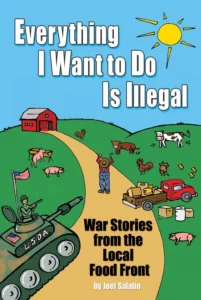
Everything I Want to Do Is Illegal: War Stories from the Local Food Frontline
Joel Salatin
This is the flagship manifesto for small-scale food freedom, direct-to-consumer farm sales, and regulatory advocacy. Salatin walks through real-world legal battles over unpasteurized dairy, farm-site sales, and local food distribution.

Author: Team FRM
The FindingRawMilk Team is dedicated to building the most comprehensive and transparent directory for raw milk enthusiasts. Our mission is to bridge the gap between local farms and consumers by providing verified listings, clear state-by-state legal guides, and educational resources. We believe in the importance of food freedom and strive to make sourcing high-quality, farm-fresh milk as simple as a single search.



Leave a Reply