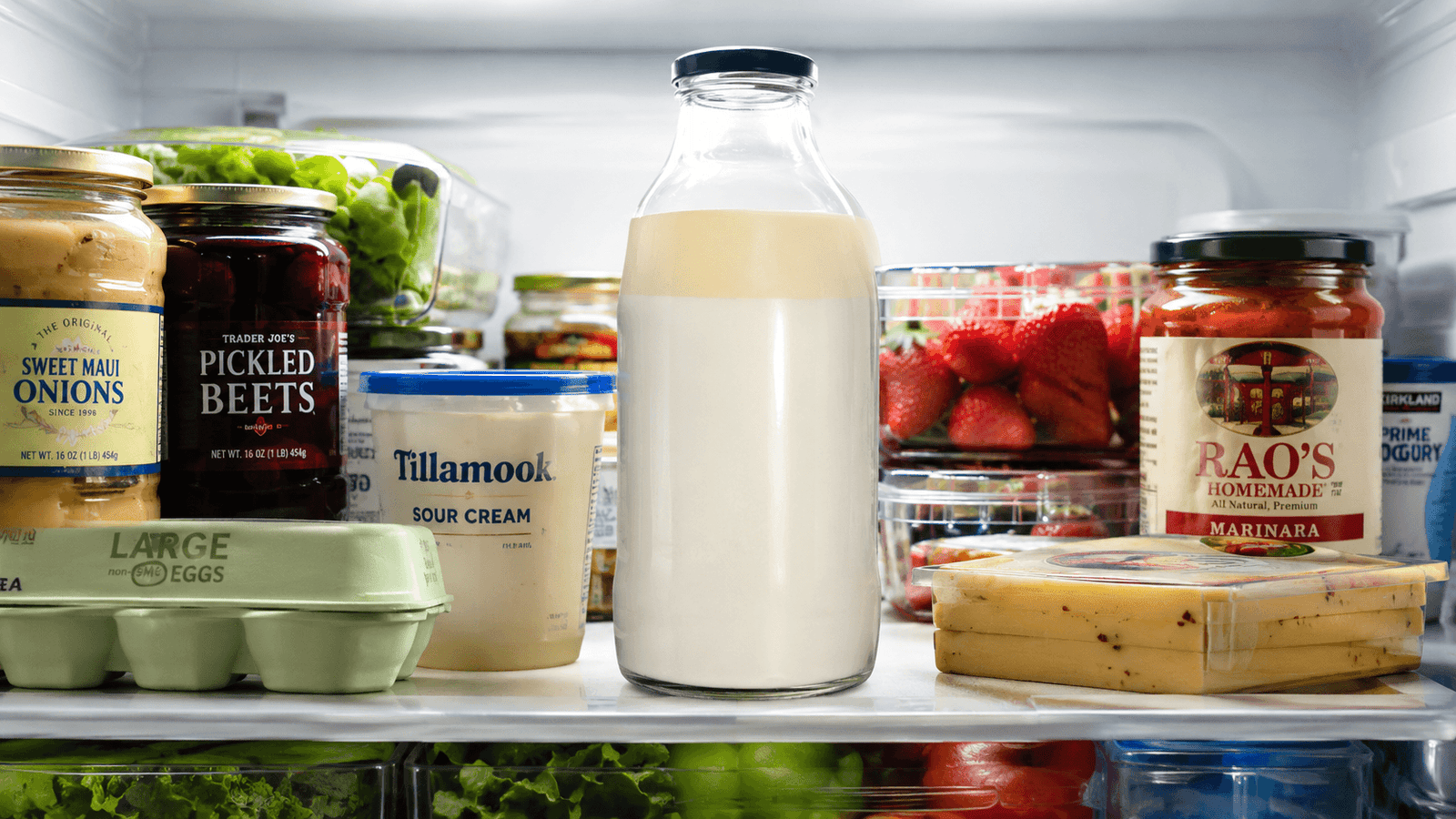
How to Store Raw Milk
Fresh raw milk is one of the least processed foods you can buy. Unlike processed dairy products, it contains natural cream, enzymes, proteins, and living microorganisms.
Because raw milk is unpasteurized, proper handling is essential. Good storage habits preserve flavor, maintain quality, and prevent spoilage.
Whether you bought your first gallon or have sourced from local farms for years, this guide explains exactly how to store raw milk for the best results.
How to Store Raw Milk in the Refrigerator
Temperature determines how fast your raw milk spoils. Put your raw milk into the refrigerator immediately after you bring it home.
- Set your refrigerator between 33 and 38 degrees F (0.5 to 3 degrees C).
- Place bottles on the bottom shelf toward the back where temperatures stay coldest.
- Avoid the refrigerator door completely.
- Use an insulated cooler with ice packs if your drive home takes longer than 20 minutes.
Every degree above 38 degrees F shortens the shelf life of your milk. The refrigerator door exposes milk to warm air every time you open it, causing constant temperature shifts. Storing your bottles on a lower back shelf keeps the temperature stable and preserves quality. For broader cold storage guidelines on perishable foods, review the USDA Food Safety and Inspection Service recommendations.
Choose the Best Storage Container
You can store raw milk in glass or food-grade plastic. Both options work when you clean and seal them correctly.
Glass Bottles
Glass cleans easily, does not absorb fridge odors, and keeps milk colder for longer periods.
Food-Grade Plastic
Plastic weighs less and will not shatter during transport. However, heating, washing, or repeated use of plastic can release microplastics into raw milk over time. If you use plastic containers, never fill them with hot liquids, and replace plastic jugs immediately if they get scratched or scuffed.
Always cap your bottle tightly. Raw milk acts like a sponge and absorbs flavor from strong foods like onions, garlic, and fish. A tight seal also prevents cross-contamination.
Handle the Cream Line
Raw milk is non-homogenized, so the butterfat naturally floats to the top.
- Invert the bottle gently 2 to 3 times before you pour to mix the cream back into the milk.
- Avoid shaking the bottle violently, which can damage the delicate cream structure.
- Skim the top layer with a spoon if you want heavy cream for your morning coffee.
Understand Shelf Life and Freshness
Raw milk generally lasts 7 to 14 days when you keep it consistently cold. Freshness depends on farm cleanliness, rapid cooling after milking, and how often you open the cap.
| Storage Condition | Expected Shelf Life |
| Maintained at 33 to 35 degrees F | 10 to 14 days |
| Maintained at 36 to 38 degrees F | 7 to 10 days |
| Stored in refrigerator door | 3 to 5 days |
| Left on counter during meals | Shortens total life by 1 to 2 days per occurrence |
Check your milk with your senses daily:
- Fresh signs: Mild dairy smell, sweet flavor, smooth liquid texture, and natural cream separation.
- Spoilage signs: Sharp sour odor, thick chunks, physical curdling while cold, or excessive gas pressure when you open the lid. Discard milk if you notice these signs.
How to Store Raw Milk in the Freezer
Freezing lets you buy raw milk in bulk from local farms without wasting a drop.
- Pour out 1 to 2 inches of milk to leave headspace for liquid expansion as it freezes.
- Seal the lid tightly and place the bottle upright in your freezer.
- Label the container with the purchase date.
- Thaw the frozen bottle in your refrigerator for 24 to 48 hours before you need to drink it.
Never thaw milk on your counter or in hot water. Rapid heating ruins the texture and encourages bacterial growth. Once thawed, invert the bottle to mix the cream back in and use the milk within a few days.
Transport and Serve Safely
Keep the cold chain intact from the farm to your glass.
- Bring a hard-sided cooler with frozen gel packs when you buy milk direct from the farm.
- Pour the exact amount you plan to drink and return the bottle to the fridge right away.
- Rinse empty glass bottles with cold water immediately, then wash with hot water and dish soap before returning them to your farmer.
Common Raw Milk Storage Mistakes
| Mistake | Better Practice |
| Leaving milk in a warm car | Refrigerate promptly or use a cooler |
| Storing in the refrigerator door | Store on a back lower shelf |
| Leaving the cap loose | Keep tightly sealed to block odors |
| Letting milk sit out during meals | Pour your portion and return the bottle to the fridge |
| Freezing completely full bottles | Leave 1 to 2 inches of headspace |
| Forgetting purchase dates | Label containers clearly with the date |
Frequently Asked Questions
Should I store raw milk in glass or plastic?
Glass works best because it holds cold temperatures, eliminates microplastic concerns, and keeps flavors pure. Food-grade plastic offers a lightweight, shatterproof alternative for travel, but glass remains the healthiest long-term choice.
Why does my raw milk taste different in the summer?
Milk flavor shifts throughout the year based on what the animals eat, their breed, and the season. Fresh green pasture in spring and summer produces sweeter, yellow-tinted milk, while winter hay produces a milder taste.
Can I leave raw milk on the counter to make butter or kefir?
Leave raw milk at room temperature only when you intentionally culture it. Keep drinking milk refrigerated below 38 degrees F at all times to preserve freshness.
Does cream separation mean the milk has gone bad?
No. Raw milk is non-homogenized, so cream naturally rises to the top over time. Simply invert the bottle to remix the cream.
We hope this helps you learn how to store raw milk.
Find local farms, raw milk sources, and state regulations near you by checking our location directory on FindingRawMilk.com. Verify your local laws before purchasing by reviewing state-by-state resource guides, found here.